r/centerleftpolitics • u/ProgressiveSnark2 • 9h ago
r/centerleftpolitics • u/AutoModerator • Jun 14 '25
💬 Discussion 💬 Discussion Thread
The place to be for CLPeeps 😎
r/centerleftpolitics • u/SHEEEIIIIIIITTTT • 6h ago
Pastor Adam Hamilton (Democratic Nominee for US Senate in Kansas) refuses to sell out trans people in campaign
r/centerleftpolitics • u/NoCup9605 • 13h ago
Students at North Carolina A&T, the largest HBCU in the U.S., marched an hour to vote after officials removed the on campus polling site
Enable HLS to view with audio, or disable this notification
r/centerleftpolitics • u/Slow-Property5895 • 13h ago
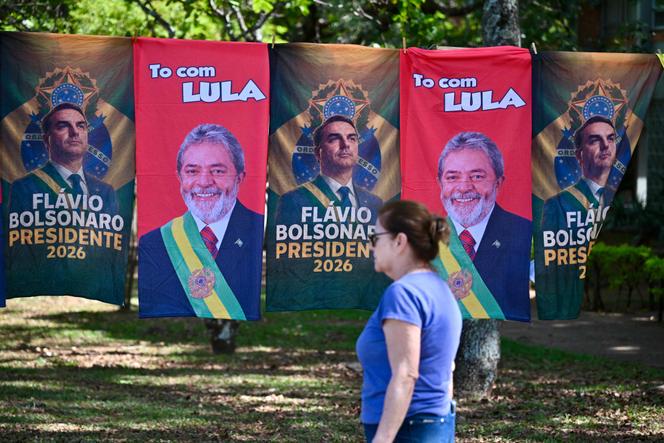
📥 Election 📥 Lula’s Victories over Far-Right Candidates in the 2022 and 2026 Presidential Elections: Victories for Democracy and Progress in Brazil Worth Celebrating, but Also a Need to Reflect on Why the Far Right Enjoys Widespread Support and to Heal a Polarized and Divided Society
In Brazil’s 2026 presidential election, left-wing candidate Lula successfully staged a comeback in the second round after trailing right-wing candidate Flávio Bolsonaro in the first round, defeating him and winning the presidency. This marks the fourth time Lula has been elected president of Brazil.
ㅤ
In 2022, Lula defeated Jair Bolsonaro (Flávio Bolsonaro’s father). I wrote a commentary article at the time. The 2026 election is similar to the 2022 election in both its background and implications. Both reflect the divisions within Brazilian society, and Lula’s victories in both elections represent victories for democracy and progress. I am publishing my old article once again.
ㅤ
Lula’s Return in the 2022 Election: A Victory for Democracy and Progress in Brazil
ㅤ
On October 30, the results of Brazil’s 2022 presidential election were announced. Lula, the candidate jointly nominated by the left-wing coalition, defeated incumbent President Bolsonaro, who was supported by the right, by a narrow margin of less than 2%, and was elected the next president of Brazil.
ㅤ
Lula previously served two terms as president of Brazil from 2003 to 2010. His victory in this election means that Lula has returned to the presidency after 12 years, and also marks the return to power of Brazil’s left-wing forces after their removal from office in 2016 and electoral defeat in 2018. The defeat of Bolsonaro, known as the “Tropical Trump,” represents a major setback for the right wing in Brazil and Latin America. As Brazil is the largest country in Latin America and one of the world’s major powers, this election also has enormous implications for global politics, economics, ecology, ideology, and the international order.
ㅤ
This election can be described as a decisive confrontation between Brazil’s progressive left-wing forces and conservative right-wing forces, a historic choice by the Brazilian people concerning “where Brazil should go.” The election results reflect not only the victory of progressive forces but also the division of Brazilian public opinion. The electoral outcome of 50.9% to 49.1% demonstrates that approximately half of voters still supported Bolsonaro’s positions and agreed with his reelection.
ㅤ
And anyone familiar with Bolsonaro himself and his positions will understand how this support reflects the rampant influence and strength of Brazil’s right-wing populist and even far-right, broadly fascist forces.
ㅤ
While Bolsonaro’s positions on economic issues may still fall within the traditional right-wing spectrum, his attitudes toward political and social issues are extremely “politically incorrect.” He has openly praised the authoritarian rule of Brazil’s former military government, which had previously been thoroughly condemned and discredited, and expressed disdain for democratic politics and a pluralistic society. He has openly disparaged women, homosexuals, Black Brazilians, and Indigenous peoples, and sought to repeal legislation protecting the rights of these groups enacted under left-wing governments. Bolsonaro also presents himself as a devout evangelical Christian, claiming that “those who do not believe in God should all die.”
ㅤ
Yet it was precisely such a figure who was elected president in the 2018 election with 55% of the vote. After taking office, he overturned the progressive policies of the Workers’ Party governments under Dilma Rousseff and, earlier, Lula, implementing a series of measures that were anti-human rights, anti-diversity, and anti-democratic.
ㅤ
According to a Reuters report citing Human Rights Watch, the Bolsonaro government introduced various legislative measures that deprived Indigenous peoples of their rights to own and control land, while legalizing mining and logging on those lands. This also triggered an environmental crisis, causing ecological deterioration in many natural areas that should have been protected, including the Amazon rainforest, known as the “lungs of the Earth,” as a result of excessive mining and deforestation, thereby harming both Brazil and the world.
ㅤ
Bolsonaro also tolerated and even encouraged violent law enforcement by the police. In 2020, Brazil recorded the highest number of deaths caused by police violence in its history, with Black people accounting for 80% of the victims. At the same time, the Bolsonaro government also persecuted political opponents through criminal proceedings.
ㅤ
After the coronavirus spread around the world, including in Brazil, the Bolsonaro government refused to acknowledge the dangers of COVID-19 and refused to use scientific methods to combat the virus. Instead, it believed and promoted conspiracy theories such as “the virus is fabricated” and “vaccines cause illness.” As a result, large numbers of Brazilians became infected and died in the near-total absence of preventive and control measures, and the economy also suffered a severe blow.
ㅤ
Nevertheless, Bolsonaro generally adhered to the democratic order and did not use illegal means, such as a military coup, to overthrow the democratic system. Political opposition forces, including feminists and LGBT groups, were still able to conduct public activities and criticize the Bolsonaro government.
ㅤ
Moreover, Bolsonaro’s measures of sacrificing environmental protection in exchange for economic development and abandoning the defense of human rights in favor of strengthening public security did indeed achieve certain results. During Bolsonaro’s four years in office, despite the COVID-19 pandemic, Brazil’s economy continued to grow, with increases in both industrial and agricultural output. Strengthening police powers to combat crime also led to noticeable declines in the rates of crimes such as murder, rape, and robbery.
ㅤ
However, these limited achievements were clearly built upon violations of human rights, harm to minority groups, and destruction of the ecological environment. Like the Trump administration in the United States, the Modi government in India, the Erdoğan government in Turkey, and the Orbán government in Hungary, they all came to power through democratic elections but employed methods resembling those of dictators. While satisfying the demands of some voters, they did not hesitate to harm the interests of other groups, especially vulnerable and marginalized populations. For the sake of their countries’ short- and medium-term development, they were willing to sacrifice long-term interests and disregard global concerns.
ㅤ
During Bolsonaro’s presidency, women’s rights, LGBT rights, and Indigenous rights were all violated. Although the rights advocacy and movements of various vulnerable groups did not face direct violence or complete prohibition, there was a clear regression compared with the periods when left-wing leaders such as Lula were in power. The Bolsonaro government also refused to cooperate with other political factions, including left-wing forces, acted arbitrarily by exploiting its monopoly over executive power, and even attacked relatively neutral judicial institutions, thereby damaging democracy.
ㅤ
It was under these circumstances that Brazil entered the 2022 election. Bolsonaro’s opponent was none other than former President Lula, whose positions and policies were completely opposite to his. Lula came from an ordinary family and began working while still a teenager, gaining a deep understanding of the hardships faced by ordinary people. Later, Lula participated in the labor movement and was arrested. He gradually entered politics, became the leader of Brazil’s Workers’ Party, and struggled against the Brazilian military government of the time. From 1989 onward, Lula ran for president several times, finally winning the presidency in 2003 and successfully securing reelection in 2006, serving for eight years.
ㅤ
During his presidency, Lula vigorously promoted programs aimed at “eradicating poverty,” raised the level of social security and public welfare, and improved the lives of the poor, for example by constructing affordable housing, providing subsidies to impoverished families and students, and improving agricultural infrastructure. Having come from a working-class background, Lula naturally also strongly supported the labor movement and worked to improve workers’ rights. As a left-wing democrat, Lula also firmly supported the feminist movement, the LGBT rights movement, and the civil rights movements of Indigenous peoples and Black people. He contributed significantly to efforts concerning women’s freedom to obtain abortions, the legalization of same-sex marriage, and Indigenous land ownership. Lula also attached great importance to environmental protection, issuing a series of decrees prohibiting excessive mining and logging and protecting the Amazon rainforest. As a democracy activist who grew up under the dictatorship of the military government, Lula also firmly defended democracy and political pluralism. Although he did not pursue a reckoning with the former military government, he sought as much as possible to weaken the political influence of the military and far-right forces closely connected to it. Lula’s political style and measures also had a certain populist character, but compared with a right-wing populist such as Bolsonaro, Lula was clearly a representative of left-wing populism.
ㅤ
Lula’s eight years in office can be described as remarkably successful. He transformed Brazil, a country characterized by authoritarianism and enormous disparities between rich and poor, into a democratic and relatively equal country. The rights of vulnerable groups, including women, homosexuals, and Indigenous peoples, received greater protection and development, and society made tremendous progress. However, after leaving office, Lula became deeply embroiled in corruption scandals, which also prevented him from participating in the 2018 election. His successor (and also his student), Dilma Rousseff, Brazil’s first female president, likewise became embroiled in corruption scandals and left office under a cloud in 2016. The conclusions regarding these corruption allegations are ambiguous, but what can be established is that political struggles were involved. In particular, Lula’s arrest in 2018 was clearly intended to prevent him from running for president and confronting Bolsonaro. Those who influenced the judiciary included serving senior Brazilian military officers with numerous connections to the former military government, such as Brazilian Army Commander Eduardo Villas Bôas, who publicly declared that Lula should be put in prison.
ㅤ
Under these circumstances, in the 2018 election, Brazil’s Workers’ Party and the entire left wing could only hastily nominate Fernando Haddad, who had almost no public recognition, as their presidential candidate. As a result, he lost by a margin of approximately 10% to Bolsonaro, a powerful “dark horse” who had benefited from the global wave of conservative populism. This ended more than a decade of Workers’ Party rule, and a far-right politician took control of Brazil’s state power.
ㅤ
Of course, Bolsonaro’s rise to power was not merely the result of scandals involving Lula and other left-wing figures. It was also the consequence of a resurgence of racism, Christian conservatism, and male chauvinism in Brazil, as well as part of the global proliferation of right-wing populism.
ㅤ
After Brazil ended military rule and achieved democratization during the later stage of the global “third wave of democratization,” it experienced, along with many other Latin American countries, a wave of left-wing progressivism that lasted until the beginning of the 21st century, with left-wing politicians and parties coming to power one after another. Progressive ideologies and positions advocating social justice, the welfare state, labor rights, women’s rights, LGBT rights, ethnic minority and Indigenous rights, and social diversity became widely popular in Latin America. However, after approximately 20 years of left-wing ascendancy, although movements for equal rights achieved considerable success, the economies of Latin American countries remained sluggish, and crime rates remained high. Brazil was no exception. This caused dissatisfaction among many Brazilians.
ㅤ
Even more dissatisfied were conservative groups in Brazil, including white supremacists, Christian conservatives (especially evangelicals and fundamentalists), and authoritarians. Just as these groups in the United States were dissatisfied with the American Democratic Party, their Brazilian counterparts were dissatisfied with the policies supporting feminists, homosexuals, and Indigenous peoples implemented by Lula’s government and its successors. Among them, evangelical Christians, who account for 30% of Brazil’s population, were particularly hostile to various progressive positions, regarding women’s liberation, same-sex sexual behavior, and the legalization of sex work as terrifying threats. Many Brazilian men also felt uneasy and even fearful about women’s awakening and struggle and the threat these posed to their interests, and deeply resented the feminist-supporting left wing. Meanwhile, the “identity politics” through which women, LGBT people, and Indigenous peoples participated in politics and pursued rights based on their own identities also stimulated right-wing conservative forces to develop their own opposing conservative version of “identity politics.”
ㅤ
Consequently, just as American conservatives nominated Trump, these groups also put forward Bolsonaro as their representative to run for office and govern. During the election, conservatives also made extensive use of the internet to spread fake news, disparage and slander Lula and other Workers’ Party figures, and disseminate conspiracy theories. For example, numerous WhatsApp groups that spread fake news and defamatory claims about the Workers’ Party played an important role in encouraging many voters who were unaware of the truth to dislike the Workers’ Party and support Bolsonaro. Ultimately, Bolsonaro won the 2018 election. This process was almost a replica of Trump’s rise and electoral victory in the United States, with the only difference being that Bolsonaro’s victory was relatively easier than Trump’s.
ㅤ
During Bolsonaro’s four years in office, on the one hand, he achieved certain results in economic development and improving public security; on the other hand, he violated human rights, especially the rights of vulnerable groups, damaged the environment, and undermined political democracy and social diversity. Evaluations of his administration therefore became highly polarized. It was under these circumstances that the 2022 election became a decisive confrontation between progressivism and conservatism in Brazil.
ㅤ
The election results proclaimed the victory of Brazil’s progressive camp. They represented not only Lula’s personal return but also the return of democracy and a pluralistic society. Looking across Latin America, left-wing forces have won most national elections in recent years, reflecting a comprehensive revival of the Latin American left after a resurgence of right-wing conservative forces. If we also consider the Democratic Party’s victory in the 2020 US presidential election and the Canadian Liberal Party’s continued hold on power following the 2021 election, progressivism throughout the Americas has achieved considerable success.
ㅤ
However, the full picture of reality is not so optimistic. In this Brazilian election, Lula won by a narrow margin of less than 2%, reflecting that nearly half of voters still approved of Bolsonaro’s positions and “political achievements,” and that conservative forces remain deeply entrenched. The vote ratio of 50.9% to 49.1% also symbolizes the divisions within Brazilian society. In the congressional elections held simultaneously with the first round of Brazil’s presidential election, right-wing and far-right parties won more seats than the Workers’ Party and other left-wing parties, reflecting unfavorable public opinion toward the left. Moreover, such a composition of Congress will clearly constrain the Lula government. According to opinion polls, in the upcoming US midterm elections, the Republican Party is expected to make a comeback and capture majorities in both the Senate and the House of Representatives. Meanwhile, in September this year, Chile held a referendum on a new constitution with considerable progressive characteristics, but 62% of voters voted against it, also reflecting a setback for progressivism.
ㅤ
Therefore, progressive forces in various countries should not be overly delighted by Lula’s victory. Instead, they should engage in greater reflection, consider why large numbers of people, including many centrist voters, support far-right political figures, and adjust their policy positions and methods of communication in order to gain broader and more extensive support. For Lula and the Workers’ Party, they must also prepare to face the various challenges of governing and strive to bridge social divisions and promote national unity. The policy proposals Lula put forward during his campaign and the individuals he planned to appoint to his administrative team reflect his attempt to reduce the elements of left-wing populism and radicalism, increase the influence of establishment politics, and emphasize compromise and reconciliation. This is a highly commendable move. In today’s world of severe political polarization, compromise and reconciliation, consideration of multiple interests, and gradual progress are rare and valuable.
ㅤ
Nevertheless, this electoral victory is still worthy of celebration by democrats, especially progressives, in Brazil, Latin America, and throughout the world. Lula’s narrow victory prevented far-right populist forces from continuing to hold power in Latin America’s largest country and defended Brazil’s democracy. It is extremely important for protecting women, LGBT groups, Indigenous peoples, and ethnic minorities, and is also conducive to protecting the Amazon rainforest and Brazil’s ecological environment and slowing the onset of the climate crisis. The forces of democracy and progress around the world must continue to struggle and unite more actively to defend the hard-won achievements of democracy, progress toward equal rights, and environmental improvement, and to prevent the historical tragedies of authoritarian dictatorship and human rights violations from recurring.
(The author of this article, Wang Qingmin, is a Chinese writer based in Europe and a researcher in international politics.)
r/centerleftpolitics • u/Ok_Crazy1195 • 18h ago
📰 News 📰 Ohio venues cancel Vivek Ramaswamy events as backlash grows
r/centerleftpolitics • u/BulwarkOnline • 18h ago
💬 Discussion 💬 I'm Lauren Egan, a political reporter at The Bulwark covering the Democrats, the 2026 midterms, and the fight over the party's future. Election Day is just eight days away. AMA!
r/centerleftpolitics • u/Ok-Coyote2382 • 16h ago
Senator Perry of Pennsylvania was apparently part of DJT ATTEMPT to deny 2020 election results.
r/centerleftpolitics • u/Apollo_Delphi • 17h ago
📥 Election 📥 A new Political Campaign AD in support of US Senate candidate Abdul El-Sayed is generating conversations.! - Released by Cenk Uygur’s Rebellion PAC.
Enable HLS to view with audio, or disable this notification
r/centerleftpolitics • u/Ok_Crazy1195 • 1d ago
📰 News 📰 Trump Gets Into a Heated Back-and-Forth With Reporter, Yelling for Over a Minute After She Refuses to Back Down
r/centerleftpolitics • u/foodie_2598 • 1d ago
Economic woes transform the Midwest into a massive midterm battleground
r/centerleftpolitics • u/Mean-Quail-6219 • 1d ago
SERIOUS Michigan Senate Race: "Empowering Black Americans" exposed as a white-founded/funded organization to support GOP candidates
r/centerleftpolitics • u/MartinPlaut • 1d ago
📰 News 📰 Board of Deputies declares the Green Party racist and warns other parties to give them a wide berth.
thejc.comr/centerleftpolitics • u/Placid_Pelican • 2d ago
Lets implement age limits for politicians
r/centerleftpolitics • u/Plaintalks • 2d ago
📥 Election 📥 The 2026 campaign is getting ugly — especially on the right
r/centerleftpolitics • u/MaleficentPiccolo715 • 2d ago
What Maine voters are saying about the Collins-Jackson Senate race — PBS News
apple.newsr/centerleftpolitics • u/DoesntMatterBrian • 3d ago
Pennsylvania Gov. Josh Shapiro launches super PAC as presidential speculation mounts
r/centerleftpolitics • u/No_Celebration2215 • 3d ago
Eva Longoria
Wow. Eva came out hard for the Democrats today. She’s electric!
r/centerleftpolitics • u/Slow-Property5895 • 3d ago
Opinion Behind the Popularity of Eileen Chang and “Runology”: The Troubled and Unpredictable Fates of Chinese Emigrants Who Leave Their Homeland, and Imagination Versus Reality of Their Lives in Foreign Lands
ㅤ
Recently, journalist Chai Jing (柴静) produced a program about the Chinese woman writer Eileen Chang (张爱玲), revealing some details of Chang's life before and after she left China and sparking considerable discussion. Chang's departure from mainland China in 1952, followed by her journey through Hong Kong to the United States, has been a popular topic on the Chinese-language internet in recent years. It also reflects one aspect of the recent phenomenon of “Runology” in China.
ㅤ
Chai Jing, a former reporter for China Central Television (CCTV) who moved to Europe many years ago, is herself a prominent figure among a new generation of Chinese emigrants known as “run people.” Her production of a program about the circumstances surrounding Eileen Chang's departure from China carries a sense of kinship born of shared adversity. It also connects and echoes the history of Chinese people leaving their homeland across several decades and generations.
ㅤ
The Chinese internet slang term “run” (润) is a phonetic borrowing from the English word “run,” meaning to flee or escape. It refers to leaving or preparing to leave one's Chinese homeland to escape difficulties or even disasters and seek a new life elsewhere, whether in another region or another country. The information, knowledge, and discussions concerning how to “run,” where to “run,” and the history of such departures are collectively known as “Runology” (润学), while those who are leaving or have already left are colloquially called “run people” (润人).
ㅤ
Eileen Chang was one of the most famous among the large numbers of “run people” who fled mainland China during the wave of departures surrounding the dramatic upheavals of 1949. Another intellectual giant, Hu Shih (胡适), along with figures such as Qian Mu (钱穆), Fu Sinian (傅斯年), and Ni Kuang (倪匡), as well as many less prominent intellectual elites and ordinary people, also left mainland China during that period, heading to Taiwan, Hong Kong, Europe, the United States, and other parts of the world.
ㅤ
Their lives in Hong Kong, Taiwan, or the West were not necessarily very happy, but they escaped the brutal political storms, famines, and shortages that would engulf mainland China over the following decades, and spent the latter halves of their lives in relative stability. Eileen Chang, for example, lived until 1995. Hu Shih and some others died earlier only because of illness. There were also Chinese scholars based in the United States, such as Tsung-Dao Lee (李政道) and Chen-Ning Yang (杨振宁), who did not return to China in the first place, as well as Charles K. Kao (高锟), who, like Eileen Chang, first went to Hong Kong and then to the United States. In the relatively free and prosperous environments outside mainland China, they achieved remarkable accomplishments and even received the distinction of winning Nobel Prizes.
ㅤ
By contrast, Chinese people from various social classes who remained on the mainland or returned from abroad, particularly intellectual elites such as Lao She (老舍), Chen Yinke (陈寅恪), Shen Congwen (沈从文), Ding Ling (丁玲), Yao Tongbin (姚桐斌), Zhao Jiuzhang (赵九章), and Chen Tianchi (陈天池), suffered through successive disasters, including the Campaign to Suppress Counterrevolutionaries (镇反), the Anti-Rightist Campaign (反右), the Great Famine (大饥荒), and the Cultural Revolution (文革). Some died tragically, while others survived but were left deeply scarred. The contrast makes the good fortune of Eileen Chang and other “run people,” and the misfortune of those who stayed behind, all the more striking. Many people on the Chinese-language internet enthusiastically discuss these figures and their histories, clearly using them to allude to contemporary China and reflect the attitudes of some Chinese people today.
ㅤ
The rise of “Runology” in recent years stems from the stagnation of China's reforms and its pronounced economic downturn, particularly the impact of the COVID-19 pandemic and the “zero-COVID” policies, including lockdowns, which have made people's lives generally more difficult and deprived them of hope. Many Chinese people whose rights and interests have been harmed are disappointed with China's current situation, and quite a few hope to leave the country and seek opportunities abroad. The experiences of earlier “run people” such as Eileen Chang and Hu Shih have inspired them and become examples to follow. They praise Chang and others for their foresight, for not being deceived by sweet talk and false promises into remaining on the mainland, and for “running away” in time to avoid subsequent disasters. They even jokingly call Chang, Hu Shih, and others “pioneers of Runology” and “anti-scam pioneers.”
ㅤ
It is emotionally understandable that many Chinese people, for various reasons, hope to “run” out of China and admire earlier “run people” such as Eileen Chang. However, their understanding of the history and reality of emigration is actually biased and idealized, and does not entirely correspond to the facts.
ㅤ
Take Eileen Chang as an example. Although leaving China did spare her the impact of subsequent political campaigns, she faced a meager income and financial hardship in the unfamiliar environment of the West. She never again produced any widely celebrated literary works, and spent the following decades living a relatively quiet and withdrawn life. This stood in sharp contrast to her years in China, when she produced outstanding works one after another and rapidly rose to fame. To a large extent, this was because she had left behind the people, places, and social environment of her homeland, as well as the linguistic world of her mother tongue—all of which had nourished her literary creativity and provided the conditions in which she could thrive. She became like water cut off from its source or a tree severed from its roots.
It is worth noting that some of Eileen Chang’s achievements after leaving mainland China, including writing The Rice-Sprout Song (《秧歌》) and Naked Earth (《赤地之恋》), as well as conducting research on Chinese literature, were accomplished precisely during her time in Hong Kong and Taiwan, far surpassing what she achieved during her much longer stay in the United States. This further illustrates, from another perspective, the importance of one's native language and the cultural environment of one's homeland.
ㅤ
Although Eileen Chang was fluent in English, she was still more accomplished in Chinese writing than in expressing herself in a foreign language. The pressures and everyday concerns of life in the United States also left her with little leisure or peace of mind for writing. Chang, who had lived in relative obscurity in America, regained prominence in her later years and after her death largely because Chinese academic circles rediscovered her work and Chinese readers embraced it. This, in turn, stimulated Western interest in and research on her.
ㅤ
It can be said that, for a writer of such stature, Eileen Chang's life after leaving China for the United States was uneventful and somewhat desolate, and her career was not particularly successful. Among the other, less famous “run people,” some achieved success, while others experienced lives that were far from smooth or satisfactory. It is simply that successful individuals tend to remain in the spotlight and receive more attention both in their countries of residence and in China, while those who struggle are overlooked, and often deliberately withdraw from public attention themselves, remaining largely unknown.
ㅤ
Whether the fate of “run people” is fortunate or unfortunate, and whether their lives are good or bad, is often determined by the broader circumstances of their times, over which they have little control. For example, China experienced another wave of emigration during the 1980s and 1990s. At the time, many believed that China was heading toward collapse while Europe and America represented paradise. Moreover, the gap in economic development and living standards between China and foreign countries was indeed enormous. Many preferred to live in basements and wash dishes for a living abroad rather than return to China.
ㅤ
Among those who left China at that time were quite a few elites from within the political system and broader society, who were willing to abandon their privileged positions at home in order to “run” to developed countries. However, China's economy subsequently took off and its society became more stable. People of similar social standing who remained in China generally seized opportunities to become wealthy and achieved greater success than those who had drifted overseas. This forms a striking contrast with the entirely different fates of those who chose to stay or “run away” around 1949.
ㅤ
The differences in their fates were determined by the choices made and policies adopted by China's rulers at critical historical junctures, by conditions in the countries to which they emigrated—particularly those countries' attitudes toward immigrants—and by the relative levels and trajectories of development in China and abroad. These outcomes were not the result of individual effort, nor were they developments that individuals could accurately foresee or meaningfully influence. Eileen Chang and Hu Shih could not have foreseen with any great certainty what would later happen in China. They simply made choices between leaving and staying based on their personal preferences and aversions.
ㅤ
If China's rulers in the 1990s had closed the country off from the outside world, intensified the persecution of dissidents, and allowed the economy to collapse and development to stagnate, those who “ran” to foreign countries would have been regarded as “wise” and “fortunate,” while those who stayed would have suffered fates similar to those who remained in the 1950s. Conversely, if China's rulers in the 1950s had refrained from mass arrests and killings and instead treated intellectuals and respected members of society well, as they had solemnly promised in 1949 and earlier, those who stayed or returned from abroad would have been entrusted with important responsibilities. Those who “ran” to Hong Kong, Taiwan, the United States, or Europe would instead have been seen as people who had “failed to recognize the direction of the times,” missing valuable opportunities to achieve distinction and accomplish great things, and spending the rest of their lives in disappointment and marginalization. Given the historical circumstances and preceding developments, all these hypothetical scenarios were entirely plausible. The happiness and disasters actually experienced by those who stayed or left in the real course of history were not easy to predict.
ㅤ
After the end of the COVID-19 pandemic and China's lifting of its COVID-related restrictions, however, the “run people” of this new wave have been relatively unfortunate. They are confronting a global wave of conservative, xenophobic populism, including in Europe, the United States, and Japan. From national policies to individual attitudes, countries have become increasingly unfriendly toward immigrants and refugees.
ㅤ
For example, US Immigration and Customs Enforcement (ICE) has carried out extensive arrests of undocumented immigrants, and many Chinese people who entered the United States illegally through irregular migration routes have been detained in immigration detention centers. Japan has substantially raised the requirements for business management visas and permanent residency, even applying some changes retroactively, leaving many Chinese people who “ran” to Japan out of admiration for the country devastated and with nowhere to turn. European countries have also tightened their immigration policies, making it increasingly difficult for both regular immigrants and refugees in exile to obtain long-term residence status, leaving their futures uncertain. The social atmosphere in countries around the world has also shifted from supporting diversity and welcoming outsiders to hostility toward those perceived as different and widespread racial discrimination.
ㅤ
Moreover, even liberal exiles who oppose China's political system and people who are pro-American, pro-Japanese, or pro-European are subjected to discrimination and exclusion. Xenophobia in various countries is primarily directed at people's ethnicity and place of birth rather than their political positions. Chinese “run people” are not necessarily welcomed or accepted simply because they admire freedom and democracy or feel an affinity with their host countries. Exceptions may be made for a small number of individuals deemed useful to the host country, but such cases do not represent the experience of the majority.
ㅤ
Even setting aside these recent political and social trends, Chinese people who move to foreign countries face numerous difficulties and obstacles in unfamiliar environments. Differences in language, culture, customs, and other aspects of life create considerable inconvenience. Democracy is not a universal remedy, either. Democratic countries also suffer from class divisions, the uglier aspects of human nature, bureaucracy, various forms of discrimination, and injustice. Chinese “run people” who arrive in foreign countries full of admiration for the free world must still worry about food, clothing, housing, transportation, and interpersonal conflicts.
ㅤ
Many Chinese people who enjoyed reasonably respectable lives at home, with some resources and personal connections, find that their resources and skills are almost entirely “reset to zero” after “running” abroad. They must start everything from scratch, often experiencing downward social mobility and being forced to undertake physically demanding and low-status work. In the process of adapting to rules, social conventions, and ways of dealing with people that differ considerably from those in their homeland, many “run people” inevitably have to learn costly lessons through bitter experience.
ㅤ
For example, Yuan Tengfei (袁腾飞), a well-known Chinese liberal public figure who had previously expressed great admiration for the United States, received an exorbitant medical bill from an American hospital shortly after moving there. He could not help venting his anger and dissatisfaction in a furious post on WeChat Moments. Although European Union countries generally offer better healthcare coverage and require less out-of-pocket spending, their healthcare systems suffer from inefficiency. Beyond healthcare, many sectors in Europe and America have problems unfamiliar to outsiders, which people only discover through firsthand experience, including inefficiency, complicated procedures, and racial discrimination.
ㅤ
Many Chinese “run people” only realize the gap between their ideals and reality after actually arriving in Europe, America, Japan, or other countries, and feel deeply disappointed. Within these Chinese emigrant and exile communities, conflicts also arise over competing interests, political differences, and personal grievances, leading people to scheme against and harm one another. There are many other hardships and sufferings that are difficult to put into words. As a Chinese person living away from home in Western Europe, I have considerable firsthand experience of these realities. Some Chinese people who have already “run” choose to return to China because life in foreign lands has become too difficult, painful, and hopeless.
ㅤ
Whether Eileen Chang and Hu Shih in the past, Yuan Tengfei and Chai Jing today, or the many lesser-known Chinese “run people” who have left their homeland, they have all departed from familiar surroundings for foreign lands, whether in pursuit of freedom or a livelihood, to escape disaster or seek a new beginning. They have escaped some forms of suffering only to encounter other hardships; gained some of what they sought while losing things they never wanted to lose; some have been relatively fortunate and happy, while others have experienced misfortune and hardship; some struggle to establish roots in foreign countries, while others return to their homeland. Still others have no permanent home, cannot return to the place they once called home, and remain caught in uncertainty between “running” and “returning”...
ㅤ
Fundamentally, the many crises and problems within China's political system and society, particularly the lack of democracy and freedom, and the fact that the lower and middle strata of society endure so much hardship while receiving so little in return, are the reasons why many Chinese people choose to uproot themselves and leave their homeland behind, “running” to other places. Yet many Chinese people also harbor excessively idealized visions of the West, as well as Hong Kong, Taiwan, Japan, and other destinations, and have overly high expectations of freedom, democracy, and their effectiveness. These expectations differ significantly from reality.
ㅤ
Most Chinese people living in foreign lands do not lead particularly satisfactory lives. Leaving China has not freed them from constant busyness and anxiety. Their futures are full of uncertainty, and their lives are like wild grass and drifting duckweed, uprooted and adrift, without a sense of identity or belonging. Ultimately, the hope for a happier future for the Chinese people lies in reform and progress within mainland China itself.
ㅤ
(The author, Wang Qingmin (王庆民) , is a Chinese writer based in Europe and a researcher of international politics. The original article was written in Chinese. The English translation contains minor revisions.)
r/centerleftpolitics • u/CharacterPolicy4689 • 3d ago
💭 Question 💭 abdul el-sayed is not center left, so why is the subreddit clogged with pro el-sayed spam?
this is not a center left subreddit.
r/centerleftpolitics • u/Silly_Concentrate_60 • 3d ago
Dr. Abdul El-Sayed responds to JD Vance calling him a “little weasel who should shut his mouth and show a little gratitude”: “What you’re talking about is a fucking Wolverine. You can take your Buckeye and shove it somewhere else.”
Enable HLS to view with audio, or disable this notification
r/centerleftpolitics • u/Otherwise_Grade3318 • 3d ago
Mandy Patinkin: "Help get Abdul El-Sayed elected to the senate! Jewish safety depends on a real multiracial democracy - and Abdul is the one fighting to protect it.
Enable HLS to view with audio, or disable this notification
r/centerleftpolitics • u/Michael_Fuchs_ • 4d ago
The USA after Trump: A Weberian analysis of presidential authority loss, DOGE federal agency cuts, state-level diplomacy, and the rise of US federalism.
r/centerleftpolitics • u/Bubbly-Site-3872 • 4d ago
📥 Election 📥 U.S. Senate nominee for Michigan Abdul El-Sayed is noticing a disconnect between the questions voters are asking and the media's fixations
Enable HLS to view with audio, or disable this notification
Sanity cannot be over rated.
r/centerleftpolitics • u/holmess2013 • 5d ago
📰 News 📰 Trump's second term is more racist than ever
Trump has a long track record of racist rhetoric, but I was curious how that plays out in refugee admissions data. Shockingly, since Trump took office, he’s effectively shut our doors to all refugee origin countries but one: South Africa, specifically Afrikaners. On the whole, not only do they have a relatively weak case for refugee status, they're also predominantly white…..
Full article: https://samholmes285.substack.com/p/trumps-second-term-is-more-racist