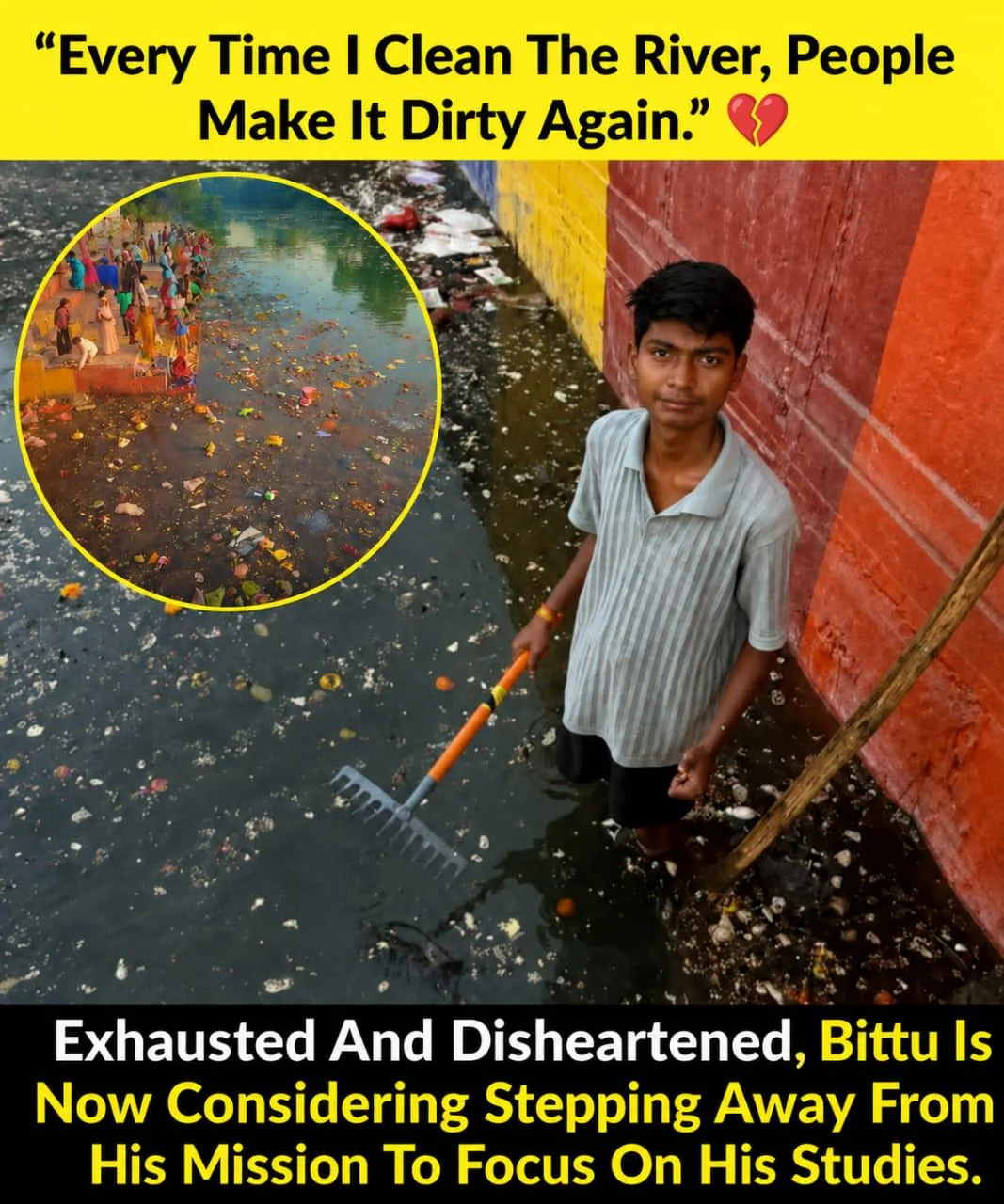
I recently saw a video of the Ganga riverbed in Haridwar exposed, and the amount of filth visible was genuinely disturbing. There seemed to be very little aquatic vegetation, and it made me wonder about the state of the river's ecosystem beneath the surface.
This got me thinking about something I'd like to hear people's honest opinions on.
India's rivers, particularly the Ganga, hold enormous religious and cultural significance for millions of people. I respect people's right to practise their faith, and I understand that rituals such as offering milk, flowers, ashes, and immersing idols are deeply rooted in tradition.
But should religious faith give us the right to dispose of anything we want into a natural water body?
Consider some common practices:
- Throwing flowers, garlands, clothes, plastic packaging, and other ritual waste into rivers.
- Pouring milk and other offerings into rivers.
- Immersing idols made with paints, plaster, and other materials that can pollute the water.
- Disposing of other waste into rivers under the assumption that the water is sacred and will somehow purify everything.
I believe these practices need to change.
You can perform a ritual, offer your prayers, and fulfil your religious obligations without dumping the materials into a river. Flowers and other biodegradable offerings can be composted, idols can be immersed in designated artificial tanks, and other materials can be collected, recycled, or disposed of safely.
The ritual can remain sacred without the river becoming a dumping ground.
I'm not suggesting that people should be prohibited from bathing in rivers. Bathing, swimming, and other activities that don't involve dumping waste are a different matter, although they too should be managed responsibly.
My bigger concern is the ecological impact. Rivers are living ecosystems, not just water sources or places of religious significance. Pollution threatens fish, aquatic vegetation, and other organisms that depend on these waters. The Gangetic dolphin, for example, is an endangered species, and the health of its river habitat is critical to its survival.
So here's my question:
Would you support a law that prohibits dumping waste, religious offerings, milk, idols, and other materials into rivers and lakes, regardless of the religious or cultural reasons behind it?
Such a law could provide designated alternatives for religious practices, impose reasonable penalties for violations, and apply equally to everyone, including industries and other major polluters.
I'd genuinely like to understand the opposing arguments, too.
- If you support such a law, how would you balance environmental protection with religious freedom?
- If you oppose it, why? Do you think it would interfere with religious rights, be difficult to enforce, or simply be ineffective?
- Should certain offerings be exempt if they are biodegradable, or should all ritual materials be kept out of natural water bodies?
- Would you support the law if the government provided convenient, affordable alternatives for performing these rituals?
I'm not interested in attacking any religion or tradition. I'm interested in whether we can preserve our faith and cultural practices while also protecting the rivers that sustain us.
At what point should environmental responsibility take precedence over the way we've traditionally practised our faith? Or do you believe these two things can coexist without a legal ban?