r/suns • u/Dense_Government9500 • 6h ago
This Is Gonna Be A Very Long Season
212
Upvotes
I'm glad I'm gonna spend it with all of you fine folks. Suns in 4 forever!
This post contains content not supported on old Reddit. Click here to view the full post
r/suns • u/Dense_Government9500 • 6h ago
I'm glad I'm gonna spend it with all of you fine folks. Suns in 4 forever!
r/suns • u/VolumeValuable3537 • 4h ago
In post game, he was essentially saying they gotta stop taking bad shots, play ANY defense, force them to go side out or something, and specifically said that this wasn’t the right game for Booker be in facilitator mode. EJ sounded very disappointed in Booker.
r/suns • u/Sweaty-Blacksmith-81 • 9h ago
r/suns • u/eyeneedtoknow • 5h ago
Suns vs Thunder
8 minutes left in the 4th quarter and Booker has only ATTEMPTED 6 shots. What is he doing? Why is he being paid so much money and not ATTEMPTING enough shots when he’s having an off game? Is it time to move on from Booker???
EDIT: I like Devin Booker….. but not as the 1st option/primary ball handler. He is being paid franchise player money but is better off a 2nd option and an off ball player.
r/suns • u/GlitchMango78 • 3h ago
This post contains content not supported on old Reddit. Click here to view the full post
r/suns • u/Decent_Argument1757 • 4h ago
Back again. I'd love to hear the pro Booker crowd defend this one. His burst and athleticism is gone and he knows it. My theory is that he doesn't force the issue anymore against good defensive teams because his pride won't let him. It's easier to play the "playmaker" role and be Mr. Cool than embarass yourself getting shut down on every iso play.
For gods sake, Dillon has more explosiveness than Devin at this point.
Side notes:
Bridges should be dealt but unfortunately I believe they will extend him to justify the trade and double down on it.
Jalen Green looks good but is clearly the one that is being traded away at some point.
Luke Kennard only playing 16 minutes after shooting 3/5 from 3 and having no plays ran for him.
r/suns • u/AbracaDaniel21 • 4h ago
Is Fleming not good enough to get minutes?
I thought last year we saw a lot of good from him and u really thought he would’ve ended up being at least a first off the bench kind of guy. Now he’s only getting garbage time minutes.
The Suns traded their two best 3 point shooters for a guy that’s actually smaller than Fleming and I feel like Bridges isn’t doing anything different than what Fleming could do.
Does someone know something I don’t?
r/suns • u/Expensive-Pie-9124 • 2h ago
I am a book fan, but tonight was undeniably rough. For the record I don’t want him to or think he would ask out.
That said, his play almost seemed like a protest against the coaches/FO.
Watching his post game interview with Duane Rankin, it seemed the closest to outright criticizing coaching and teammates that I can remember seeing from him
Did anybody else get that vibe from tonight or am I way off base?
r/suns • u/phxhoney • 7h ago
What do you think about the new logo in the practice shirts? I think it looks like an oversprayed decal!
r/suns • u/TomCroozin • 12h ago
Going to my first Suns game soon
If any day one Suns fans are in here, tell us what you remember!
r/suns • u/trakstaar • 21h ago

r/suns • u/Particular-Owl-5997 • 1h ago
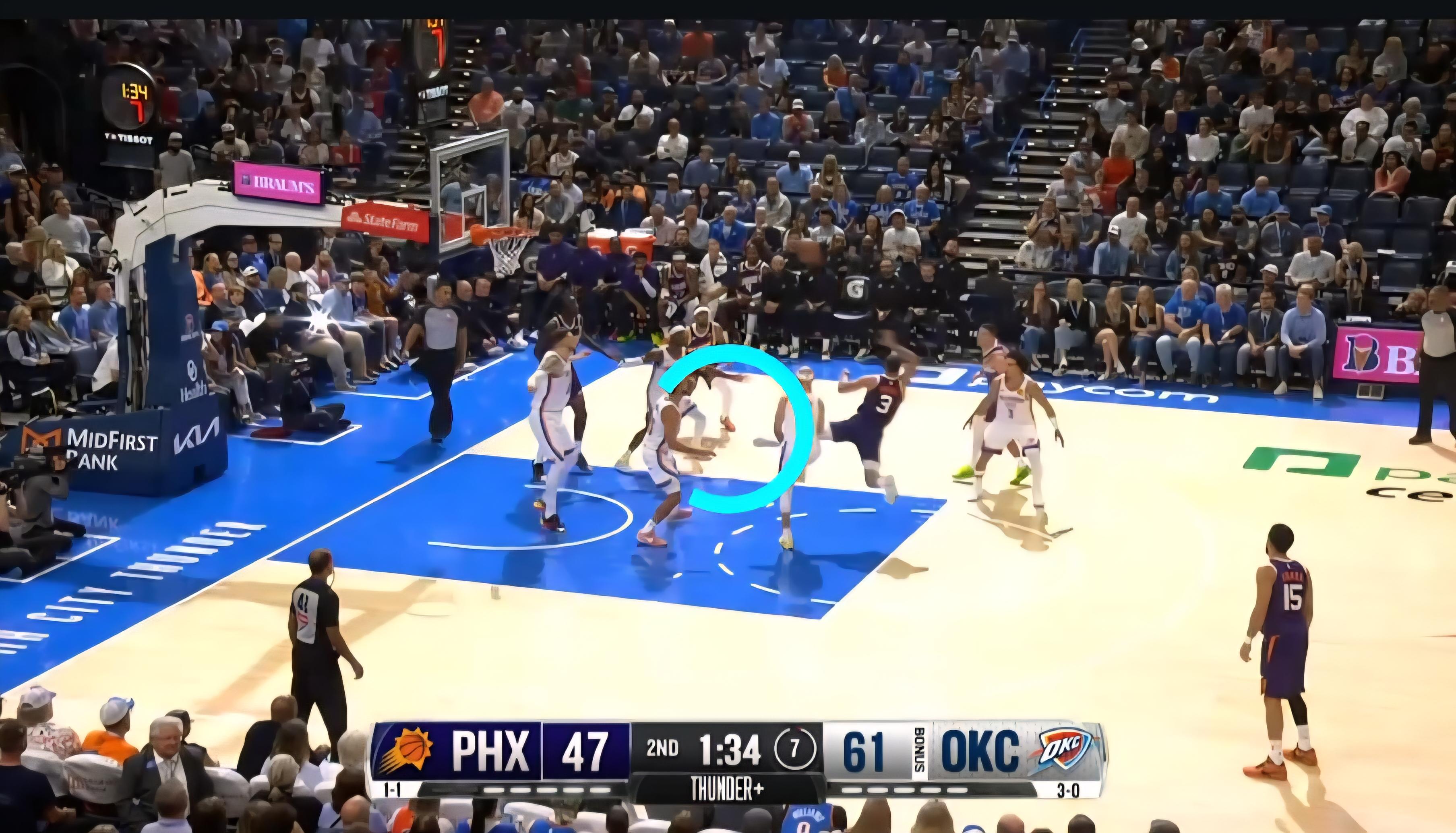
That's chip level commitment lol.
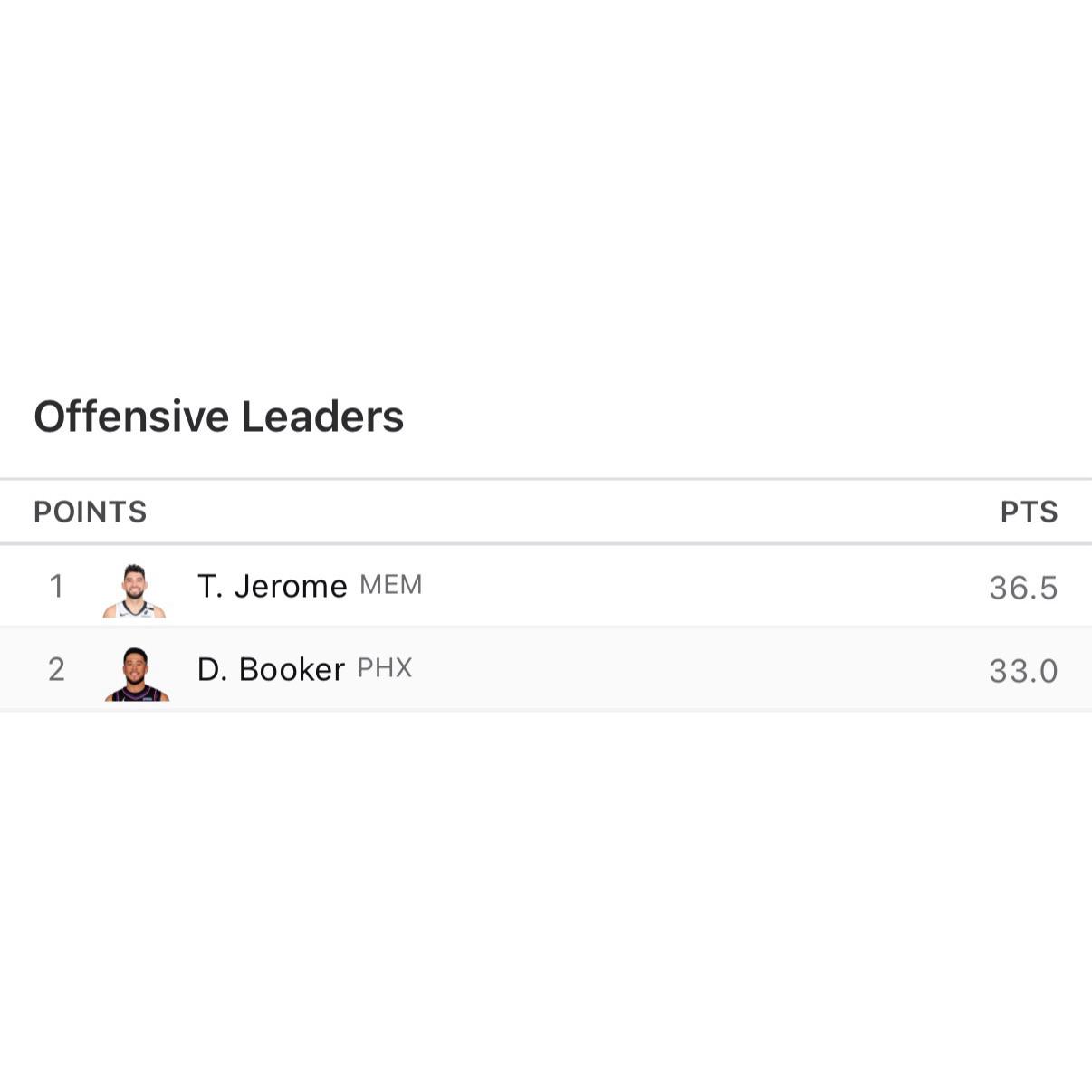
I know we traded him to get CP3 and I do that again 10 out of out 10 times, but it’s nice to dream.
This post contains content not supported on old Reddit. Click here to view the full post
r/suns • u/PHXSoulBender • 13m ago
Wtf is coach doing?
Fleming Needs to Play! Peat Needs to Play! Let These Young Guys Develop!
I really think the Suns need to commit to developing their young guys and give them consistent minutes instead of constantly relying on the same veterans. Im talking about Rasheer Fleming, Khaman “ManMan” Maluach, Koa Peat, Ryan Dunn, and Oso. These guys all bring something different to the table, and I think there is a lot of potential here if we actually give them time to develop.
Im not saying these guys are going to turn into All Stars overnight, and Im not saying they should automatically get minutes regardless of how they play. Im saying you cannot expect young players to improve if you never let them get comfortable on the court. You have to let them make mistakes, learn from them, and figure things out at the NBA level. If they mess up, coach them. If they struggle, help them work through it. You cannot pull the plug every time a young player makes a mistake and then expect him to develop into a reliable rotation player.
Look at Rasheer Fleming. I think he deserves a real opportunity to show what he can do. He has the physical tools to become a very useful modern NBA forward, and his athletic testing gives us some interesting reasons to be excited about his potential.
Fleming measured approximately 6 foot 8¾ without shoes and around 225 pounds, with a ridiculous 7 foot 5¼ wingspan. That is a lot of length for a player who can potentially defend multiple positions and operate as a forward. When you have that kind of reach on a frame that can handle NBA physicality, you have something worth developing.
His 2025 NBA Draft Combine numbers are interesting, too. Fleming reportedly ran the shuttle in 2.72 seconds, which ranked first among the participants and was listed at the 100th percentile. His lane agility time was 10.95 seconds, another impressive result that points toward excellent lateral movement for his size and position. His standing vertical leap was 27 inches, which was below average, so Im not going to pretend every part of his athletic profile is elite. But the combination of his length, size, and movement ability is what makes him intriguing.
Think about what that combination could mean defensively. A long forward who can move laterally and cover ground can potentially switch onto different types of players, contest shots without needing to be perfectly positioned, disrupt passing lanes, and recover when an offensive player gets a step on him. Obviously, combine testing does not automatically translate into great NBA defense, and Fleming still has to prove that he can consistently read the game and use his tools effectively. But the physical foundation is there.
His wingspan is especially interesting because a 7 foot 5¼ wingspan on a forward sized around 6 foot 9 is unusual. He has the longest wingspan among non centers in the NBA,
The other part of Flemings development that interests me is his potential offensive fit. He does not need to become a primary ball handler to be valuable. If he can defend, rebound, run the floor, make the extra pass, and eventually become a respectable spot up shooter, he can help a good team without needing the ball in his hands all the time.
That is the kind of player you want around stars. He can potentially contribute without taking possessions away from the primary creators. He can run in transition, attack an open lane, cut when his defender turns his head, and make defenses pay for leaving him open. If his shot develops, his offensive value becomes even more interesting.
Fleming also showed flashes toward the end of last season and in the playoffs. Those moments are not enough to declare him a finished product, but they are enough to make me want to see more. If a young player shows that he can contribute in meaningful situations, why not give him a more consistent opportunity to build on it?
Ryan Dunn is another player I want to see get consistent minutes. We already have evidence of what he can bring defensively. At the 2024 NBA Draft Combine, Dunn measured approximately 6 foot 6¾ without shoes, weighed around 215 pounds, and had a 7 foot 1¾ wingspan. At Virginia during the 2023 to 2024 season, he averaged about 6.9 rebounds, 2.3 blocks, and 1.3 steals per game.
Those numbers stand out for a wing. Dunns defensive instincts, timing, length, and ability to make plays away from the ball give him a chance to become a legitimate defensive weapon. He can potentially guard different positions, disrupt passing lanes, rotate as a help defender, and provide weak side rim protection that most players his size simply cannot offer.
The biggest question with Dunn has been his offense, especially his shooting. That is a legitimate concern. Teams can make life difficult for a player if they do not respect his jump shot, and the Suns need to be mindful of spacing. But that does not mean you give up on him. It means you develop the areas of his game that need work while continuing to use the skills he already possesses.
Dunn also showed last season that he could work his way back into the rotation and earn minutes. That matters. He has already been in a position where he had to fight for playing time, and he showed that he could earn another opportunity. I would like to see the team build on that instead of making his role feel temporary.
If Fleming and Dunn continue developing, the Suns could eventually have two long, athletic defenders who bring different strengths to the court. Flemings combination of size and movement could help him defend bigger wings and forwards, while Dunns defensive instincts could make him useful as a disruptor and help defender. They do not have to become the same player. In fact, it would be better if they developed complementary skills.
Then there is Khaman “ManMan” Maluach.
ManMan is a different kind of project because his physical profile is so unusual. He measured approximately 7 foot 1¼ without shoes, with a 7 foot 6¾ wingspan, a 9 foot 6 standing reach, and a weight of around 254 pounds at the combine. Those measurements give him the kind of size that teams cannot teach.
A player with that frame has the potential to change shots around the rim, protect the basket, finish lobs, and provide a vertical threat in pick and roll situations. Even when a big man does not block a shot, his presence can make an opponent think twice about attacking the basket. That kind of defensive influence can change how an entire team plays.
Of course, ManMan is still developing. Being tall does not automatically make someone a good NBA center. He needs to learn positioning, timing, defensive rotations, screening angles, rebounding fundamentals, and how to avoid unnecessary fouls. He also needs to improve his feel for the game and become more comfortable making decisions against NBA defenses.
That is exactly why he needs developmental minutes.
Im not saying throw him out there for 30 minutes a night regardless of what happens. His leash can be shorter than the leash we give a more experienced player, especially when he is struggling with fouls or making repeated mistakes. But if he is only going to play a few minutes here and there, it becomes much harder for him to develop rhythm and learn how to handle the speed of the game.
Give him a role he can understand. Let him protect the paint, set hard screens, run the floor, rebound, and finish around the basket. Keep his responsibilities simple at first, then gradually expand them as he improves.
He does not have to become an offensive superstar to provide value. If ManMan develops into a reliable rim protector who can finish plays around the basket, that would already give the Suns something important. If he eventually becomes more comfortable passing, handling the ball in short rolls, or expanding his shooting range, that would be a bonus. But the shooting is still a projection, not something we should assume will automatically happen.
And then there is Koa Peat.
I want to see Peat get a genuine opportunity, too. He brings a different kind of appeal because of his strong frame, explosiveness, passing ability, poise, and basketball IQ. He has the potential to become the type of player who helps connect an offense instead of simply standing around waiting for the ball.
His 2026 NBA Draft Combine testing gives us another reason to be excited about his physical potential. Peat recorded a 34.5 inch standing vertical jump, also known as the no step vertical, which ranked in the 97th percentile. He also recorded a maximum vertical jump of 37.5 inches, ranking in the 90th percentile.
Think about what those numbers mean. A 34.5 inch standing vertical is an impressive result because it measures how high a player can jump without taking a running start. It shows Peat can generate serious explosive power from a stationary position. His 37.5 inch maximum vertical also shows that he can get up when he has an opportunity to build momentum.
Those are impressive numbers for a player with his strong frame. When you combine that explosiveness with his ability to pass, make decisions, and play physically, you can start to see why his potential is interesting. He is not just a big body who can bang around in the paint. If the athleticism translates to the NBA, he could potentially be a player who attacks the basket, finishes through contact, gets out in transition, and puts pressure on defenders with his physicality.
The important thing is that vertical leap testing does not automatically make someone an elite NBA athlete in every situation. It does not tell us everything about lateral quickness, conditioning, defensive instincts, or how well a player reads the game. But Peats testing gives us evidence of legitimate explosive ability, and that is another physical tool the Suns should be trying to develop.
The thing I like about players with Peats combination of strength, explosiveness, passing, and basketball IQ is that they can potentially contribute in multiple ways. They can attack mismatches, make reads when a defense collapses, move the ball quickly, create opportunities for teammates, and bring physicality to the game. Those skills can be useful even when a player is not the primary scorer.
His summer league performances also gave fans reasons to be interested in what he could become. Summer league is not the same as the regular season, and we should not treat a few good performances as proof that a player is ready for a major role. But it can show flashes of how a players skills might translate and give coaches something to build on.
Peat deserves the chance to learn through actual NBA minutes. He is a rookie, and rookies are going to make mistakes. They will miss rotations, get caught in bad positions, turn the ball over, and sometimes make the wrong read. That is part of learning. The important thing is whether they respond to coaching, improve their decision making, and start making those mistakes less often.
The Suns should not expect a rookie to play like a veteran immediately. They should be looking for progress.
And we cannot leave Oso out of this conversation, because his development is another example of why I think the Suns need to be more patient with their young players.
Oso struggled early last season with foul trouble, moving screens, and free throw shooting. Those are real problems, and Im not going to pretend they are not. A big man who gets into foul trouble constantly makes it harder for the coach to trust him. Moving screens can kill offensive possessions, and poor free throw shooting can become a problem late in games.
But look at the other side of it. Oso showed improvement when he got more opportunities and was able to settle into his role. That is exactly what I want to see from a young player. He had things to work on, and the answer was not to decide that he could never become a useful player. The answer was to let him get experience, learn the NBA game, and work through his weaknesses.
You have to give a player enough time to figure out the difference between what worked in college and what works against NBA athletes. The game is faster, stronger, and more demanding. Screens have to be set correctly. Defensive rotations have to happen on time. Fouls that a player might have gotten away with before can put him on the bench in the NBA.
Those are things players can improve at with coaching and experience.
Oso does not have to become a superstar to be valuable. If he can become more disciplined with his screens, stay out of foul trouble, improve his free throws, and continue using his passing and feel for the game, he could provide useful minutes. His development should not be written off because he had a rough stretch early in the season.
That is the point I keep coming back to. We have young players with different strengths and different weaknesses. Some are further along than others, and some need more time. But if we give up on them every time they struggle, we will never find out what they can become.
We have seen young players around the league receive meaningful opportunities and develop through real game experience. Players such as Cooper Flagg, Kon Knueppel, VJ Edgecombe, and Dylan Harper show why teams need to take their young talent seriously and give it room to grow. Every player has a different situation, and getting minutes does not guarantee success, but young players need opportunities to show what they can do.
The question is not whether every young player will become a star. The question is whether the Suns are giving themselves the best chance to find out which of these guys can become legitimate rotation players.
Now, I also want to explain why I keep bringing up players like Jalen Brunson, Nikola Jokic, and Luka Donic when talking about the Suns young guys.
Im not saying Fleming is going to become Luka, Peat is going to become Jokic, or Dunn is going to become Brunson. That is not the comparison. These superstars are examples of different offensive archetypes. They show how teams can build around different kinds of primary creators and why the supporting cast needs the right complementary skills.
A team built around a smaller scoring guard has different needs from a team built around a playmaking center. A team built around a big, ball dominant pick and roll creator has its own needs, too. The point is to look at what the superstar does best, identify what the team needs around him, and ask whether our young players have the potential to fill some of those roles.
There is another reason this matters for the Suns specifically. We need to figure out what Devin Booker is going to be for this team moving forward. Is Booker still the superstar who should be the primary offensive engine, carrying the scoring load and creating advantages for everyone else? Or is this the point where the team needs to start preparing for him to become more of a complementary star who shares the offensive responsibility with other players?
I do not think we can answer that question just by looking at Bookers name or what he has done in the past. We have to look at how he is playing, how consistently he can carry an offense, what kind of help he needs, and whether the Suns can build a competitive roster around his current level of production.
Booker has already proven that he can be a high level scorer and the focal point of an offense. The question is what version of Booker gives the Suns the best chance to compete going forward. If he is still capable of being the primary engine on a contender, then the team needs to build around his strengths. If the better path is to reduce some of his offensive burden and surround him with more capable players, then the Suns need to develop a roster that allows him to share those responsibilities.
That is another reason I want to see the young players get minutes now. Their development can help us understand what kind of team this should become. We need to know which players can defend, which can shoot, which can make decisions, which can create advantages, and which can complement Booker without needing the ball all the time.
If Booker is still the main superstar, the Suns need players who can take pressure off him defensively, finish the chances he creates, and make life easier for him offensively. If Booker transitions toward being a complementary star, the team will need more players who can create offense themselves, keep the ball moving, and share responsibility for making plays. Either way, having young players develop into reliable rotation pieces gives the Suns more options.
Take Jalen Brunson as an example. Brunson is undersized by NBA standards, but his handle, footwork, balance, change of pace, and ability to score in the paint and from the midrange make him extremely difficult to guard. He can create his own shot, draw defenders toward him, and put pressure on the defense even when the opposing team knows he is getting the ball.
When your primary creator is a guard like Brunson, you want teammates who can defend, cover ground, protect the rim, and finish the opportunities he creates. You need players who can help cover defensive weaknesses without demanding the ball on every possession.
That is where players with the physical profiles of Dunn, Fleming, and ManMan could be valuable. Long, versatile defenders can take on difficult assignments and help keep the defense together. A rim protecting center can discourage opponents from attacking the basket. Athletic wings can run the floor, cut behind ball watching defenders, and finish plays when the defense focuses too heavily on the primary creator.
Imagine Brunson beating his defender and forcing a second defender to help. If Fleming or Dunn can cut into the open space, finish at the rim, or knock down an open shot, they make that defensive decision hurt. If ManMan can set a solid screen and roll hard to the basket, he gives the ball handler another way to punish the defense.
The young players would not need to create their own offense all the time. They would need to recognize the advantage their star creates and know how to take advantage of it. On the other end, their size and defensive skills could help make up for some of the limitations that come with building around a smaller guard.
Now consider Nikola Jokic . Jokic is a completely different offensive engine because he can score from all over the floor while also functioning as an elite playmaker. The offense can run through him because he sees the court so well and can punish defenses for helping, doubling, or losing track of cutters.
Around a player like Jokic, you want movement, cutting, shooting, smart passing, and players who understand how to take advantage of the attention he draws. You want teammates who recognize when to cut, when to relocate, when to screen, and when to make the next pass instead of holding the ball.
This is where Peats passing and basketball IQ could be interesting if those skills translate consistently to the NBA. A player who can make quick decisions and keep the ball moving can help an offense become harder to defend. If Jokic passes the ball to a teammate and the defense rotates, that teammate needs to be able to make the next read. He might shoot, drive, or pass to another open player. The ball cannot stop moving just because the first option was taken away.
Dunn and Fleming could potentially contribute by cutting, running in transition, attacking open lanes, and using their athleticism without needing to create everything themselves. If their shooting improves, they could also punish defenses for leaving them open to help on Jokic.
ManMan could potentially benefit from playing alongside a playmaking big like Jokić, too. A center with his length and reach could become a lob threat and a finisher around the basket. Imagine a defense paying so much attention to Jokic passing and scoring that ManMan gets an opening to roll toward the rim. That could give the offense another weapon.
But ManMan would have to develop his screening, timing, hands, and ability to recognize openings. His size gives him a foundation, but he would still need to learn how to use it. The point is that a player does not need to be another Jokic to fit alongside someone like him. He needs to understand how to complement the way Jokic plays.
Then look at Luka. Luka is a large, ball dominant creator who can manipulate pick and roll coverage, draw multiple defenders, and create open shots for teammates. He forces defenses to make difficult decisions because he can score himself or find the open man when help arrives.
Around a player like Luka, you need wings who can shoot, defend, attack closeouts, cut at the right time, and make quick decisions. You also need a big man who can screen, roll, finish, and give the offense another option when the defense takes away the first one.
Fleming and Dunn could potentially complement that kind of offensive engine by defending tough assignments and attacking open space. If their shooting develops, they could make defenses pay for helping off them. If Luka draws two defenders and kicks the ball to Fleming, Fleming needs to be able to make the defense pay, whether that means shooting the open three, attacking a closeout, or moving the ball to another teammate.
Peat could potentially contribute as a connector who moves the ball and attacks advantages. His explosiveness could also help him attack the basket when defenders close out too aggressively. ManMan could give a pick and roll creator a vertical target who forces defenses to account for the space above the rim. If a defense focuses too much on Luka, ManMan could get opportunities as a roller, while the wings could find open space around the perimeter.
That is the reason for using these superstar examples. They represent three different ways an offense can operate. Brunson shows the value of a smaller guard who creates through his handle, footwork, and scoring ability. Jokić shows how a playmaking center can become the hub of an entire offense. Luka shows how a large, ball dominant creator can put constant pressure on a defense through pick and roll, isolation, and passing.
Each archetype needs a supporting cast that understands how to complement it. None of these young Suns players has to become one of those superstars. They need to develop skills that would make them useful alongside elite offensive talent.
And we should apply that same way of thinking to Booker.
If Booker remains the Suns primary offensive engine, the team needs to make sure he has enough defense, rim protection, rebounding, shooting, and athleticism around him. He cannot be expected to do everything himself. Dunn and Fleming could potentially help take on defensive assignments. ManMan could give the team another layer of rim protection. Peat could potentially bring physicality, transition offense, and another player who can attack advantages. Oso could help connect possessions with his passing and improve the teams options in the frontcourt.
The more these players develop, the less Booker has to compensate for weaknesses elsewhere on the roster.
If the Suns eventually decide that Booker should share more of the offensive burden rather than being asked to carry everything, then Peat becomes particularly interesting as a potential connector and decision maker. Fleming and Dunn would need to become more reliable offensively so defenses cannot ignore them. Oso would need to keep improving his passing and fundamentals. ManMan would need to become a dependable screener, roller, and finisher.
That would give the Suns more ways to create offense without requiring Booker to initiate every possession. It could also help preserve his energy for the moments when the team really needs him to take over.
But I do not want the Suns to assume Booker is no longer a superstar just because they are trying to develop other players. The point is to build a team that gives him the best chance to succeed, whether that means continuing as the primary star or gradually sharing more of the responsibility.
The Suns need to figure out what Booker can consistently provide at this stage of his career and build intelligently around that. They should not force him to be the answer to every problem, and they should not stop developing young players because they are waiting for him to solve everything offensively.
A good team is not just about having one great player. It is about putting the right pieces around that player and making sure those pieces can do their jobs. The better our young players become, the easier it becomes to evaluate what Booker needs and what kind of roster gives the Suns the best chance to compete.
That is what makes physical profiles and complementary skill sets important. A long defensive forward who can guard multiple positions can be useful next to many kinds of stars. A center who protects the rim and finishes lobs can fit with different types of creators. A forward who passes, makes quick decisions, and understands spacing can help an offense without needing to dominate the ball.
We should be thinking about how Fleming, Dunn, Peat, ManMan, and Oso can develop into those kinds of players. Not every player will fit every system, and not every player will reach his potential. But if the Suns develop several of them into reliable rotation players, the team will have more options when building lineups around Booker and whatever other offensive creators they bring in.
That is why I do not understand the idea that young players should have to prove they are already good enough before they get a real chance. How are they supposed to prove anything if they rarely play?
There is a difference between giving a player minutes and giving a player unlimited minutes. The coaching staff can establish clear expectations. If Fleming misses a defensive rotation, show him the mistake. If Dunns defender leaves him open, make him work on the shot. If Peat makes a bad read, teach him how to recognize the next situation. If ManMan gets into foul trouble, review his positioning and timing. If Oso keeps setting moving screens, make him work on his technique and hold him accountable.
Then give them another opportunity to apply what they learned.
I also think Coach Ott needs to be patient with these guys. If a young player makes one mistake and immediately gets pulled, he can start playing scared. He might hesitate on an open shot, avoid making an aggressive read, or worry more about being benched than making the right basketball play. That is not how you build confidence.
Obviously, there has to be accountability. Players should not get a free pass because they are young. But accountability should mean holding them responsible while helping them improve, not treating every mistake like proof that they do not belong on the floor.
There are also practical ways to create opportunities. The Suns can manage the minutes of Dillon Brooks, Jalen Green, and Jordan Goodwin where appropriate to open up playing time for the younger players. That does not mean those veterans have no value, and it does not mean the young players should automatically take all their minutes. It means the coaching staff should be willing to experiment with lineups and find out what combinations work.
If the Suns want to evaluate their young talent, they have to make room for it. They cannot keep talking about development while making it almost impossible for the players to build consistency.
There is a financial side to this, too. Young players on rookie scale contracts can provide valuable production without requiring the team to spend veteran level money at every position. If even a couple of these guys develop into reliable rotation players, that could give the Suns more flexibility when building the rest of the roster.
Finding useful players internally matters. You cannot always solve every roster problem by trading assets or signing another veteran. Sometimes the best move is to develop the player you already have, especially when he has physical tools or skills that are difficult to find.
Think about how valuable a long defensive wing can be in the playoffs. Think about how useful a center who can protect the rim and finish lobs can become. Think about a forward who can defend multiple positions and make quick decisions with the ball. Think about a big man who can screen properly, avoid unnecessary fouls, and keep an offense moving with smart passes. Those are different jobs, but all of them matter when the postseason slows down and teams start targeting weaknesses.
Of course, none of this is guaranteed. Fleming might not become a consistent shooter. Dunn might struggle to develop his offensive game. ManMan might need more time than expected to adjust to NBA speed and physicality. Peat might take time to find his role. Oso might continue to struggle with fouls or need more time to become consistent. There is a real possibility that one or more of these players never becomes a major part of the rotation.
But the Suns need to find out through actual development, not speculation from the bench.
I would rather see these players get consistent opportunities, make mistakes, improve, and give the coaching staff real information than spend another season wondering what they could have become if they had played more.
Fleming has the length and movement ability to become an interesting defensive forward. Dunn has already shown defensive instincts that could make him valuable if his offense becomes more reliable. ManMan has rare size and reach that could make him a rim protector if he learns the fundamentals. Peat has a combination of strength, explosiveness, passing, and poise that deserves a chance to translate to the NBA. His combine vertical numbers give us another reason to be interested in what he could become. Oso has already shown that he can make progress when he gets opportunities, and he needs to keep building on that progress.
They are not all going to develop at the same speed. They should not all have the same role. ManMan may need a shorter leash while he learns the center position, while Dunn might be ready to handle a more consistent defensive role. Fleming needs enough playing time to show whether his tools can translate, and Peat needs room to make decisions and learn from them. Oso needs to keep improving his fundamentals and show that his progress can become consistent.
But they all deserve a real development plan.
The Suns need to stop treating development like something that can happen in a few minutes at the end of a game. If these guys are part of the future, then start investing in that future now. Give them defined roles, consistent opportunities, honest coaching, and enough time to learn from their mistakes.
Fleming needs to play. Peat needs to play. Dunn needs consistent minutes. ManMan needs room to grow. Oso needs the opportunity to build on his progress.
And Booker needs a roster that gives him the best chance to show us what he can still be. If he is still the superstar who can lead the offense, build around that. If the team needs him to share more of the responsibility, develop the players who can help make that transition work. Either way, the answer cannot be to ignore the young talent we already have.
Let them develop. Let them compete. Let them earn their roles.
If we want a better future for the Phoenix Suns, we need to start building it now.
Suns fans, am I being too optimistic about this young core, or should Coach Ott be giving these young players a bigger role right now? And what do you think Booker should be moving forward? Is he still the primary superstar this team should build around, or is it time to start building a more balanced team where he does not have to carry so much of the offensive responsibility?