I was doing research for my own fanfic when I stumbled upon someone who lived a similar life to Szeto.
What we know about Szeto from the books so far:
1. He was born in the Fire Nation during a period of turmoil, when civil war, plagues, and natural disasters threatened to tear the country apart.
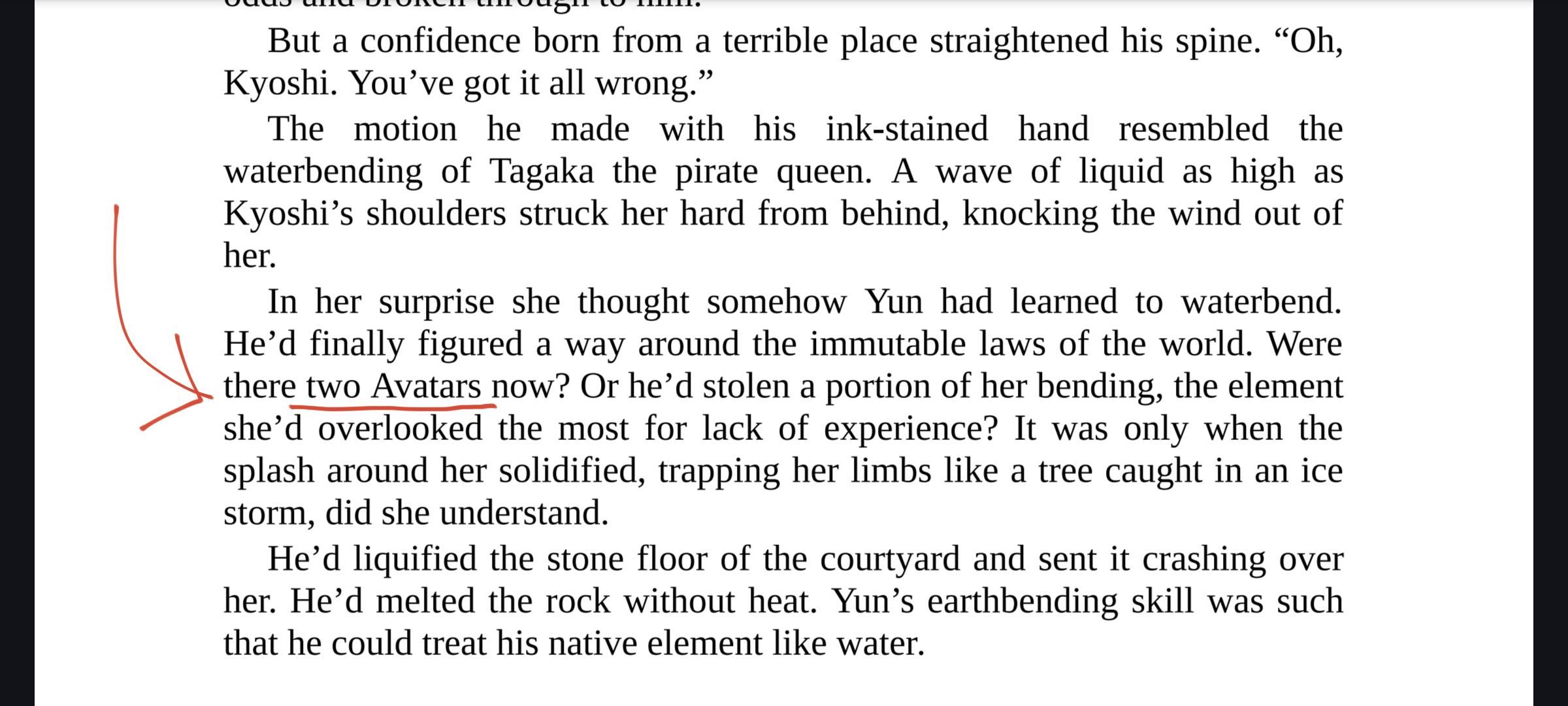
2. He was discovered as the Avatar at a young age., because he bent a second element.
3. Already fully realized by age 19
4. Started as a junior minister (though his starting portfolio was not specified)
5. A bureaucrat, a diplomat and an accountant.
6. Negotiated peace between noble clans, ending civil war
7. Ended debasement of coins, rescuing the economy from the brink of disaster
8. Established relief program for farmers during famines
9. kept his room at the Northern Air Temple almost completely empty, with only a bed and a desk. To an outside observer, he appeared to be a man with nothing to hide.
These details come from Szeto's fictional biography in the Avatar novels, particularly The Shadow of Kyoshi and The Dawn of Yangchen. Others came from the Roku novels (according to the wiki), which I admit I have not read.
And the one I found: Liu Yan) 劉晏, a famous economist and government official who lived during China's Tang dynasty (c. 715/716–780 CE).
1. He was a child prodigy. In year 725, Liu wrote a poem and submitted it to the Emperor who was performing a ritual at Mount Tai. The emperor was impressed, and had his chancellor test the boy. The chancellor called him “a sign of fortune for the empire”. Liu was then referred to as a “prodigy” and was offered a job as a scribe for the crown prince.
2. He earned a reputation as a capable local administrator. Somewhere during year 742 to 756, he became a magistrate of Xia County, an important point of transportation of supplies to the capital. During his tenure, history records stated that his collection method was never harsh, and yet the supplies were always on time. He was promoted to magistrate of Wen County. People made monuments for him.
3. He lived through a devastating civil war. During year 755 to 763, a civil war (An Lushan Rebellion) tore the country apart. Lots of men died. Agricultural production and transportation was disrupted. Even the emperor was forced to flee the capital. It severely weakened the dynasty. Most historians would say, this rebellion was the beginning of the fall of Tang dynasty.
4. His predecessor introduced severely inflated-value coinage. In year 758, the minister of finance of that time, Diwu Qi (第五琦), suggested the emperor to mint new coins. One new coin was worth 10 old coins. The next year, he minted another coin, which was worth 50 old coins. It raised a lot of fund in a short time, but food prices spiked, leading to much hunger and starvation, and there were also many forgeries of the new coins. He was demoted very soon.
5. Liu helped restore the empire's transportation system. After the war, inflation was still high. Grains were short and extremely expensive. Even the royal palace did not have much savings left. At this time, Liu personally inspected and studied the canals connecting Huai River and Yellow River. Then, he drafted labors, and led a project to dredge through the canals, and customized ships for different sections of the canals. Transport costs lowered, food shortages relieved and tax revenues increased.
6. He reformed salt monopoly. During the war, salt was heavily taxed, because it was a necessity and thus deemed the perfect way to raise funds. No one was allowed to mine, process or sell salt, except the state. Salt became a luxury. In year 762, Liu was Minster of Civil Affairs and Minister of Finance at the same time. He reformed the governmental monopoly of salt. Private mining of salt was allowed. Government purchased the salt and sold to merchants for distribution. This arrangement helped the state collect revenue more efficiently without directly managing every stage of retail trade.
- He used market information and reserves to stabilize supplies. Liu developed administrative networks that reported regional prices and economic conditions. He set up ever-normal salt granary (常平倉) at rural areas, selling salt cheap when salt was expensive, and buying them at high price when salt was abundant. This policy allowed government to respond more effectively in regional supply and demand. Soon people were able to afford salt again.
8. He set up a famine relief program. After the success of ever-normal granary, he set up other granaries for grains and silk and handcrafts. When times were difficult, he allowed villagers to sell their products, like silk or handcrafts, to the government, in exchange for grains. Then the government transported these products elsewhere, where the price was good, saving the people without causing losses to the economy.
9. His reforms greatly increased government revenue. Annual revenue from salt industry increased from 400,000 strings of coins to 6,000,000. And the number contributed to over half of the government's tax receipts. The economy quickly bounced back. And the Tang dynasty would survive for another 120 years.
10. His household contained remarkably little wealth. In year 780, Liu was framed by the Yang Yan (楊炎). He was arrested and sentenced to death. During the search of his house, they found nothing of note, except “two carts of miscellaneous books, and several hu of rice and wheat”. (According to google, 1 hu was about 60 liter in volume.)
11. And here is the most interesting part: In year 784, Liu was posthumously exonerated. In year 789, he was given the title of 司徒, one of the Three Excellencies of the traditional Chinese imperial government. You may ask, how is it pronounced? In Mandarin, it is pronounced as Situ; while in Cantonese, it is pronounced as Szeto.
Note that, over the course of the history of China, there are hundreds of people who were given the title of Szeto posthumously. It was not unique to Liu Yan. There are even people whose surname is Szeto living in China and Hong Kong.
While Liu Yan did not have anything to do with the civil war, and neither did he show diplomatic talent, nor was he a reincarnated religious figure who could bend elements, he was indeed a financial minister, who grew up a boy genius, was well-loved as magistrate, lived humbly despite his social status, dealt with debasement of coins, established relief programs for farmers, and single-handedly saved the economy.
You can verify the facts. I could be speculating things. I don’t think FC Yee publicly stated the historical reference of Szeto. Everything could have been a coincidence.
But, consider the similarities, does that not look interesting?
Other sources: