r/House_Inspections_NZ • • 27d ago

Welcome to r/House_Inspections_NZ — what this sub is for, and who runs it

Post image
1 Upvotes

Kia ora. This is a New Zealand-specific place to talk about building inspections — pre-purchase reports, weathertightness, LIMs, council records, meth and asbestos testing, earthquake-prone land, and the things that go wrong between signing the Sales & Purchase agreement and getting the keys.

Why a NZ sub. Most home-inspection advice online is American or British, and it doesn't map. We have a different Building Code, a different consent process, a voluntary inspection standard, and a very specific leaky-building history.

What's welcome here

  • Questions about a property you're looking at — you don't need to know the jargon
  • Reports you've received and want help reading
  • Renovation and consent questions where inspection is involved
  • Discussion of standards, council practice, and how the rules actually work

What's not

  • Advertising, or any post whose purpose is to sell a service
  • Naming or shaming individual inspectors or companies
  • Anything that would identify a specific property or address without the owner's consent
  • Legal advice. We can explain how things work; we can't tell you what to do about your dispute.

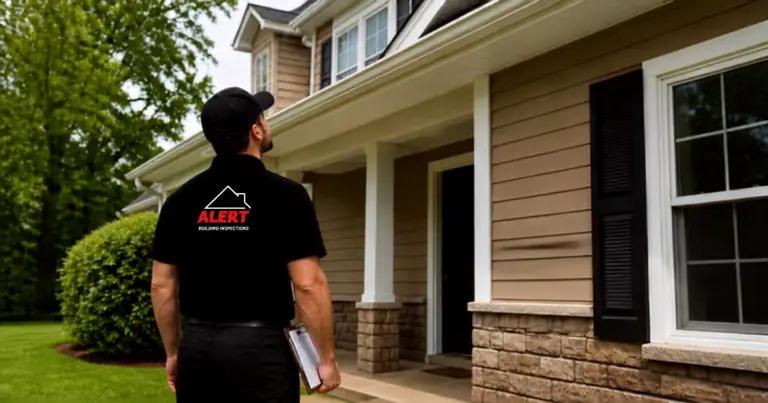
Who runs it. I’m Morgan Kircher, the owner of Alert Building Inspections. I’m a builder who’s spent years on the tools and now helps Kiwis understand what’s really going on inside their homes. I run a team of building Inspectors who inspect residential and commercial buildings throughout New Zealand.

First question for the sub: what do you want covered? I've got a list of topics ready, but I'd rather write about what people are actually stuck on.


r/House_Inspections_NZ • • 57m ago

How to pick a building inspector. There's no licence to check

Post image
• Upvotes

There's no mandatory government licence for private pre purchase building inspectors in New Zealand. Anyone can legally offer the service. Which means who you pick matters as much as what they find.

NZS 4306:2005 is the standard that exists anyway. It sets out scope, method and reporting. It isn't legally required, but the Disputes Tribunal measures reports against it. Ask whether they work to it.

Then:

Professional indemnity insurance, and how much. An inspector with no cover has nothing behind them if they miss something significant.

A sample report. Not a summary, the actual document. Photos? Moisture readings? Does it list what couldn't be accessed? Does it tell you what needs a specialist? A twelve-page report and a sixty-page report don't do the same job.

Industry body membership. Building inspectors and building surveyors each have professional organisations with their own membership requirements and standards. While membership can demonstrate a commitment to professional development, it is not a prerequisite for competence. A BCITO-trained, trade-qualified building inspector may be just as capable and experienced as a member of any industry body.

Whether they hold an LBP licence and what that covers. The Licensed Building Practitioners scheme is for people who do or supervise restricted building work. It is not a licence to inspect. An inspector who holds one has building knowledge, but it isn't a qualification to inspect.

Who turns up on the day. Some firms subcontract. Ask who's coming and what experience they have with that construction type, especially with plaster cladding.

What's excluded, in writing. Roof space, subfloor, outbuildings, the LIM, which they don't do anyway.

The liability clause. Every report limits liability somehow. Read it; it tells you what recourse you've actually got.

On price, a standard report sits in the hundreds and specialists cost more. The gap between a cheap inspection and a thorough one is small next to what a missed defect costs.


r/House_Inspections_NZ • • 5d ago

What an inspector can't see

Post image
1 Upvotes

This comes up whenever a report misses something. Sometimes it's a bad inspection. Often it's a real limit, and knowing where those limits are makes you a better report reader.

A pre-purchase inspection is visual and non-invasive.

No walls get opened. Concealed framing, pipework and anything behind a lining is invisible until something else gives it away.

The roof space might not be accessible. Low pitch, no crawl space, stored goods, or asbestos-containing materials can make it unsafe. A decent report says so.

The subfloor might not be accessible either. You need enough clearance to get under it.

No electrical certification. An inspector can note the switchboard looks old. They can't confirm the wiring is compliant; that's an electrician's job.

No plumbing testing. Visible pipework: yes; pressure testing and drain cameras: no.

No geotech. Land stability is a separate report.

No code compliance sign-off; that's the council's code compliance certificate.

And no guarantee about the future. It's a snapshot.

So when you read a report, don't look at how many problems it found. It's whether it's honest about what it couldn't assess. A report that says there was no subfloor access and recommends further investigation is doing its job. One that says nothing at all about the subfloor is covering a gap, and that gap is often exactly where the problem is.


r/House_Inspections_NZ • • 13d ago

What moisture readings actually mean

Post image
1 Upvotes

Moisture readings are in every report, and they get misread more than anything else in them.

There are two types, and they are not the same test.

A non-invasive meter gets pressed against the lining and reads through it. Nothing gets damaged. This is what nearly every report uses. It gives a relative reading, and what's behind the lining affects it, as does how hard the meter is pressed on.

An invasive test involves inserting pins into the timber, usually after a small bit of lining has come away. That gives you a real moisture content percentage for the framing. It's the one that tells you what's happening inside the wall.

A high reading on the meter means there's a reason to look closer. That's all. It isn't a diagnosis, and it isn't a repair quote. It could be a leak, or a cold surface, or condensation in a cavity.

The number you'll see quoted for decay risk is around 18 to 20 per cent moisture content in the framing. That comes off the invasive test. It is not a reading from a meter held against your gib. If a report gives you a percentage without saying which test produced it, ask.

A good report gives you the comparisons. This corner against that corner, this wall against one that's known dry, inside walls against outside, and around the junctions where water collects. It should also say where it couldn't get a reading.

One more. A dry February day yields low readings in a house that leaks in the south. Summer readings don't clear a plaster-clad house built in 2001.


r/House_Inspections_NZ • • 17d ago

Buying Real Estate at auction. Do your checks before the day

Post image
1 Upvotes

Auctions here are unconditional when the hammer falls. No finance condition, no builder's report condition, no LIM condition. If you're the highest bidder, you've bought it, and your deposit is committed.

So everything has to be done before auction day.

The inspection needs to be booked and finished before the auction. Access is often limited to a viewing window, sometimes with other buyers going through at the same time. The LIM takes up to 10 working days, so it needs to be ordered early. You'll likely pay for inspections on places you don't win, so budget for more than one.

Something many people don't realise. If the property is passed in, it hasn't sold, and you're in a normal negotiation. You can make your offer conditional on a builder's report, finance and a LIM. The conditions come straight back the moment the hammer doesn't fall.

If it does sell under the hammer, there's no going back later to say the report found something.


r/House_Inspections_NZ • • 21d ago

The leaky era. What the build year tells you

Post image
1 Upvotes

If you're looking at a house built between the late 80s and the mid-2000s, this is what you need to understand. It's also where people most often go wrong, because they assume no visible damage means no problem.

Three things happened at once.

Plaster cladding fixed straight onto the frame, no gap behind it. Plaster over polystyrene mostly, or fibre cement sheet. The paint is the only thing keeping water out, and the paint cracks. Hairline cracks. On weatherboards, a hairline crack is nothing. On this, it lets water in, and with no cavity behind, the water can't drain and can't dry.

Untreated timber. The timber treatment standard changed in September 1995 and allowed untreated kiln-dried Radiata for wall framing. That turned up in the compliance document B2/AS1 from February 1998. Wet, untreated radiata rots quickly.

The design. No eaves. Flat or low roofs. Internal gutters. Decks and balconies bolted through the cladding. All of it puts water where you don't want it and leaves it nowhere to go.

So the risk runs from the late 80s, worst between 1998 and 2004. Treated timber was required for consents from April 2004.

The bit that catches people out is that the damage is in the wall, not on it. By the time you see a stain, or bubbling paint, or a soft skirting, the framing behind has usually been wet for a long time. A house can have perfect plaster and rotten framing underneath. A well-built one from the same year can be fine. The year tells you it's worth a proper check. It doesn't tell you the answer.

If you're buying in that band, get someone who knows this construction and takes actual moisture readings. Ask what method they use before you book them.


r/House_Inspections_NZ • • 21d ago

The three documents. Builder's report, LIM, property file

Post image
1 Upvotes

People treat these as the same thing. They answer three different questions.

The building report is about condition. Someone physically looks at the house as it stands.

The LIM is about what the council knows. It's issued under section 44A of the Local Government Official Information and Meetings Act 1987, and the council has ten working days. It has to include natural hazard information under section 44B, anything special about the land including contaminants, stormwater and sewerage drains, rates owing, any consent or notice or order the council has issued, certificates from building certifiers, anything notified under the weathertight homes legislation, permitted use of the land and conditions on it, and notifications from network utilities.

The property file is the documents behind it. Consents, plans, inspection records, correspondence. Councils usually tell you to get both. This is where you find out the deck went up in 2011 and there's no consent recorded.

None of them is a warranty. A LIM is sufficient evidence that what's in it is correct as at the date it's issued. That's not the same as the property being in good shape.

And all three only hold what someone wrote down. Work done without consent that nobody caught isn't in the LIM, isn't in the property file, and might not be visible on site either. Read them together. The report tells you what's there; the file tells you what's supposed to be there.


r/House_Inspections_NZ • • 25d ago

What a pre purchase inspection actually covers

Post image
1 Upvotes

Many people buy a report thinking it's a guarantee. It isn't.

New Zealand has no mandatory licence for private pre-purchase inspectors. The existing framework is NZS 4306:2005, Residential Property Inspection. Following it is voluntary, but it's what a report gets measured against if there's a dispute later.

The inspection is visual and non-invasive. That means nobody opens a wall.

You get the subfloor if there's clearance to get under it. Piles, bearers, joists, insulation, ventilation, moisture. The roof space, if it's accessible: framing, insulation, leaks, and bracing. Cladding and exterior: what it's made of, how it's fixed, whether there's a cavity behind it, flashings, junctions, decks, and balustrades.

Moisture readings through the linings, mostly around wet areas and anywhere water would sit. Interior ceilings, floors, joinery, any movement or old repairs. Visible services like the hot water cylinder, exposed pipework and the switchboard.

What it isn't. Not a valuation. Not confirmation that the building complies with the Building Code; that's the council's code compliance certificate. Not a structural engineer's assessment. Not a title or boundary check. And not a prediction; it's the house's condition on the day it was inspected.

The most useful part of a report is usually what it says it couldn't see.