r/askmath • u/Creepy_Physics_6282 • Oct 20 '25
Trigonometry I mean…. Come on…
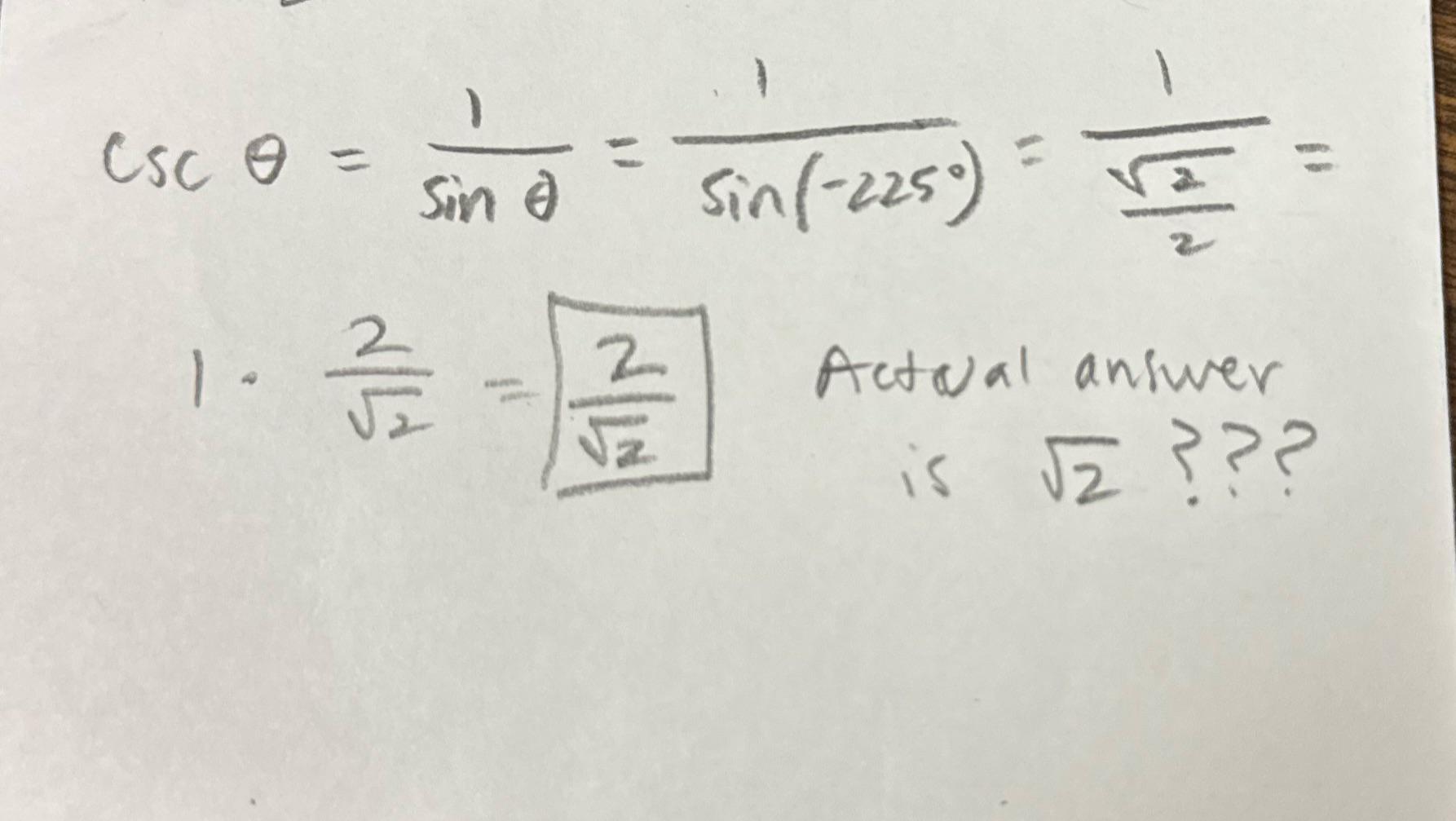
It tells me that I wrong because I didn’t simplify the first time. I simplified and like to think these equal the same thing. I wrote my example. Am I missing something?
r/askmath • u/Creepy_Physics_6282 • Oct 20 '25
It tells me that I wrong because I didn’t simplify the first time. I simplified and like to think these equal the same thing. I wrote my example. Am I missing something?
r/askmath • u/Willing-Ad7324 • May 18 '24
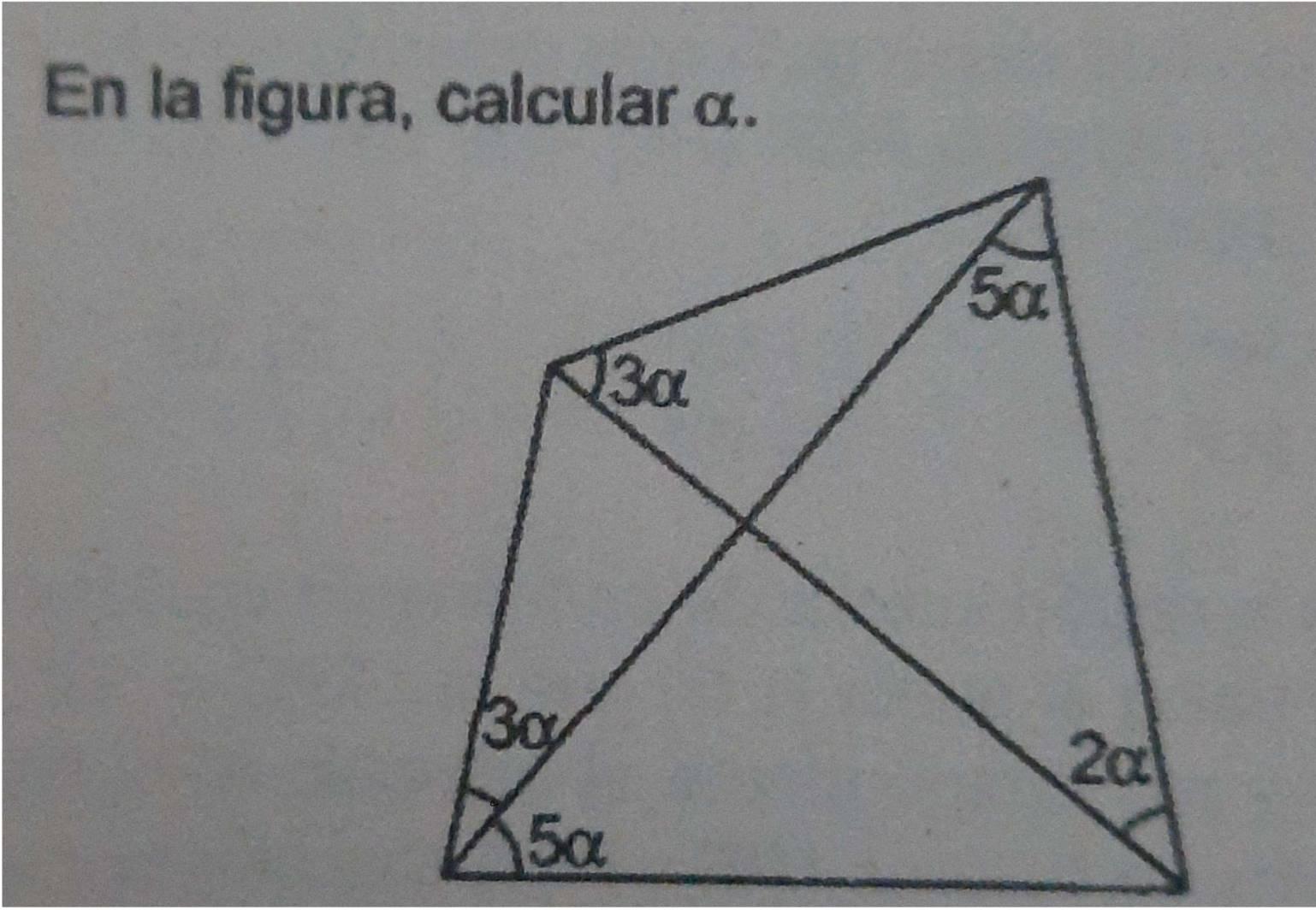
I know that the inside angle 50° and I've found almost everyother angle I'm not sure if this has to do with sin cos or some rule I don't know. any help would be appreciated
r/askmath • u/PrimeX84 • Aug 05 '25
This is a question my friend found. Its supposed to be trigonometry for 11th grade. The answer to a is supposed to be 10. What are the steps to achieving this answer? Thank you in advance.
r/askmath • u/HairySock6385 • Apr 18 '26
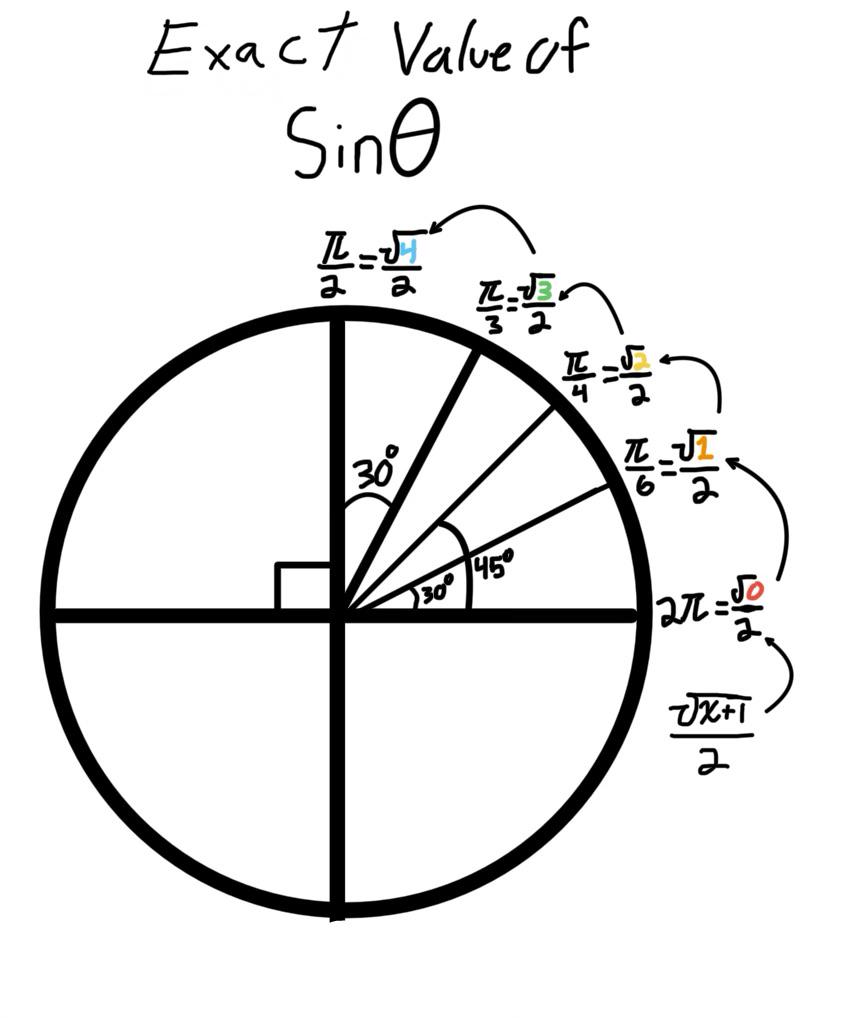
Where sinθ is:
sin(0°) = √0 / 2
sin(30°) = √1 / 2
sin(45°) = √2 / 2
sin(60°) = √3 / 2
sin(90°) = √4 / 2
I’ve expanded the exact values here to make the pattern more obvious, of course this is not what you typically see. Any idea why this pattern happens?
From everyone I’ve asked, they have no idea why this happens.
r/askmath • u/SoftMachine2833 • Sep 25 '26
I recently got into a discussion with someone about whether or not sin(x+1)^2 is bad notation. I want to keep an open mind and accept that I am wrong if that is the case, so I am asking this question here to gauge the wider opinion on this topic. I will be keeping both my position and theirs a secret for an unbiased consensus. if you want, feel free to just answer the question:
"Do you think sin(x+1)^2 is bad notation? Why?"
And I would be more than grateful. If you're willing to do more, I also have four trig expressions for you to write to see how you usually write sine and powers around sine.
Sine of the square of x.
Square of the sine of x.
Sine of the square of (x+1).
Square of the sine of (x+1).
r/askmath • u/Real-Trouble-3902 • Feb 10 '26
Sorry for the really unclear language. This is a question on a revision sheet I had.
If the point between B and A is C I’m pretty it’s saying to work out BC
What we did from there is assumed the point where the kite is (gonna say D) and C are in kinda a straight line to that it makes ACD a right angle.
Then you can do trig to get DC (can’t remember values sorry) but then after I’m not sure. Sine rule or anything so not sure
Please help.
r/askmath • u/Expensive_Increase46 • Sep 02 '26
I know that the most basic definition of cosines and sines are as ratios between the sides of right angles triangles. But sine and cosine everything shows up in so many places and in so many fields that it can't just be a normal ratio. I'll be honest sometimes this stuff and trigonometry as a whole feels like magic phlebotonium that shows up everywhere. What are sine and cosine waves, why are they special, and why can they be applied to basically everything? I know this isn't one question and I'm sorry if this isn't the right way to phrase it. I just don't get it.
r/askmath • u/Any_Tower8201 • Aug 26 '26
I feel like the book made a unnecessary restriction by using arcsine, as the interval before it clearly enable us to use any value for x from Real Numbers Set.
Please let me know if Im out of any conventions or concept here.
Thanks.
r/askmath • u/butt_head_surfer • Jul 20 '26
I’ve been staring at this problem and cannot figure out where the numerator goes. Every example just gets rid of it.
Can anyone tell me why the answer is just root 2?
r/askmath • u/Bonk_Boom • 1d ago
Didn't really know how to flair this as it is such a useful theorem. I was wondering this as it was recently a pythagorean triple day. My intuition says it should go to 100% of numbers. Is this correct? And if so does anyone have a proof?
edit: guys i meant "with all natural numbers" sorry
r/askmath • u/KaizenCyrus • Mar 07 '24
The red and green bars are aligned such that they are both equally distant to the appropriate wall (away from the camera).
Let's look at this sideways and imagine the image in a 2D space. The bars become line segments and so do the shadows.
Let the top point of the green bar be A, its bottom point B, and its shadow's farthest point C. This forms triangle ABC. Let the top point of the red bar be D, the top point of its shadow on the wall E, and the corner where the ground and wall meet F. Imagine a line perpendicular to the wall and the red bar. This line connects from point E to a point in the red bar, which we'll call G. This forms triangle DEG.
If triangles ABC and DEG are similar, then this is solvable because we can deduce other missing measurements through scaling. But this also means that angle ACB and DEG are the same, which assumes that the light source is infinitely distant. But if the light source is not infinitely distant, then we can't solve for the length of line segment DB.
Am I correct?
r/askmath • u/Jumpy-Belt6259 • Sep 21 '25
For some reason i want to transpose the tangent on the other side of the equation but our teacher specifically told us to never transpose when simplifying, what am i gonna do with this? Sure i can do normal subtraction of fractions but multiplying 1-sin to tan or its identities are a bit annoying, and i tried it and i got to an answer that made it more complicated, is my teacher wrong?
r/askmath • u/Polarfox64 • May 20 '24
Had this problem, it came to life in a parametric equation, in combination with y=-x. Misread it without the minus and solved it quite fast using the unit circle, but now I just don't know how to come to a good answer.
r/askmath • u/matteatspoptarts • Jun 14 '24
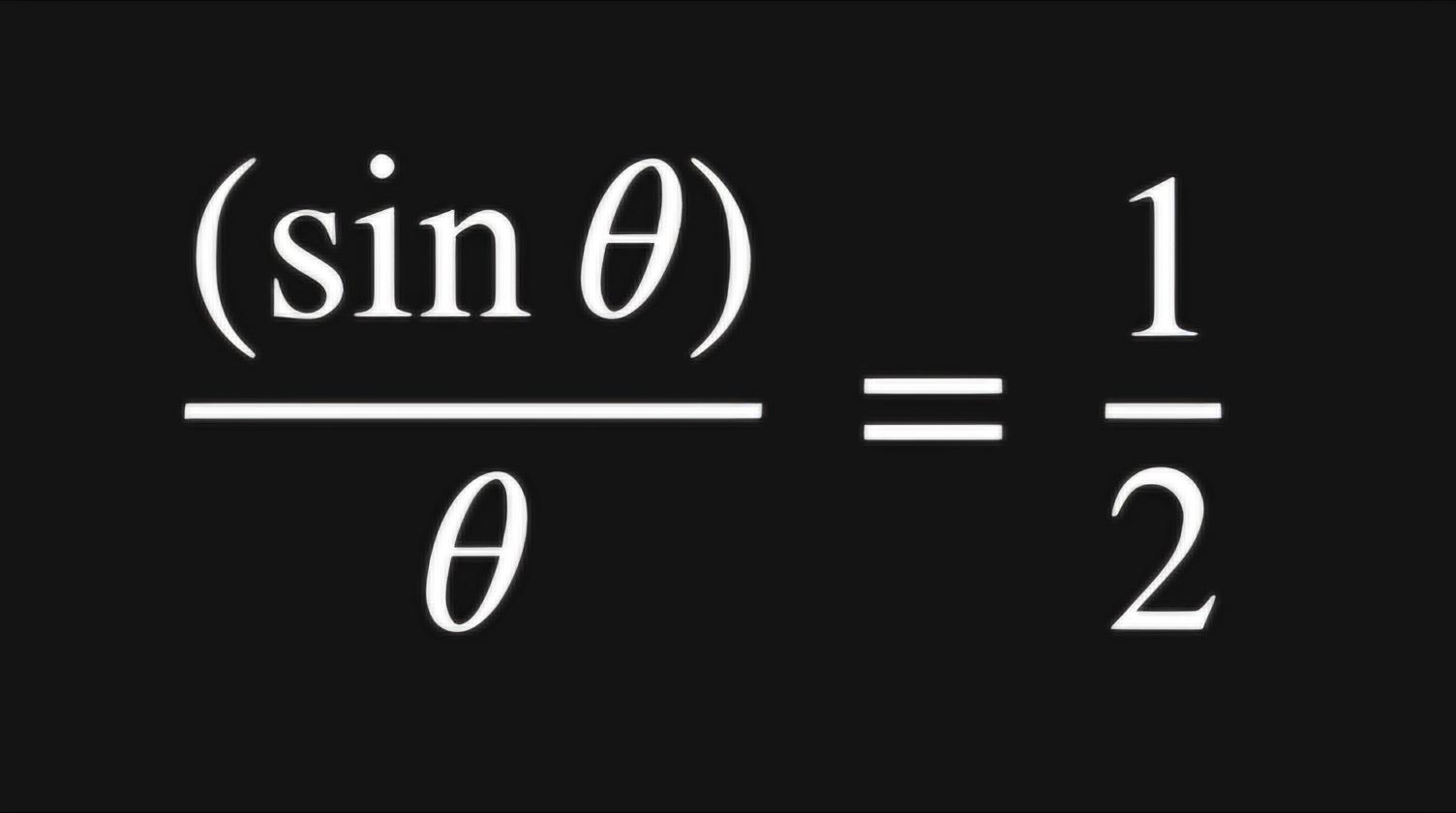
The problem is in the picture. Obviously when solving you can't "get theta by itself". I have tried various algebra methods.
I am familiar with a certain taylor series expansion of the left side of the equation, but I am not sure it helps except through approximation.
Online it says to "solve by graphing" which in my mind again seems like an approximation if I am not mistaken.
Is there any way to get an exact answer? Or is this perhaps the simplest form this equation can take? Is there anyway to solve it?
r/askmath • u/Izzy_fabulous23 • Sep 09 '26
Hello everyone!
I am taking some training to become an electrician, and we are using some trig at the moment.
I am confused about a particular way that my textbooks are asking a question. It’s a very complicated question, so I’ve just drawn up an example of the part where I’m confused.
In the first image, you can see how I learned to label right triangles in high school. I always learned that you have angles A B and C, and sides a b and c. And that an angle is always opposite the same letter as its corresponding side. Like angle B is always opposite side b, same with A and C. However, the question I’m confused on labeled the triangle like the second image. My first thought was that this would make the diagram useless and render the triangle impossible. But is that true? Is it possible to have a right triangle where angle B is opposite side a? Perhaps this is just a strange circumstance and it doesn’t really matter what labels you use, but that is my question I suppose. Any help is appreciated! TIA
r/askmath • u/okaypzzaz • 5d ago
I’m an AS level student whose syllabus has only 3 trig functions but despite that, I am not able to solve any of the identities. I know the formulas and understand what I have to do but for some reason, am not able to recognize the patterns. It’s so demotivating because I was so good at these not even a few months ago but now I’m out of practice and it’s extremely hard for me to prove any sums. For example, there’s this one problem:
1-2sin^2x/1-sin^2x is identical to 1-tan^2x. I tried solving it but I got stuck in the middle, I keep messing the algebra up 🙂↕️. How much do I have for practice for this to click? Bcz I have been doing plenty but when I revisit the questions after a week or so, I can’t solve them.
r/askmath • u/Difficult-Tackle-918 • May 14 '25
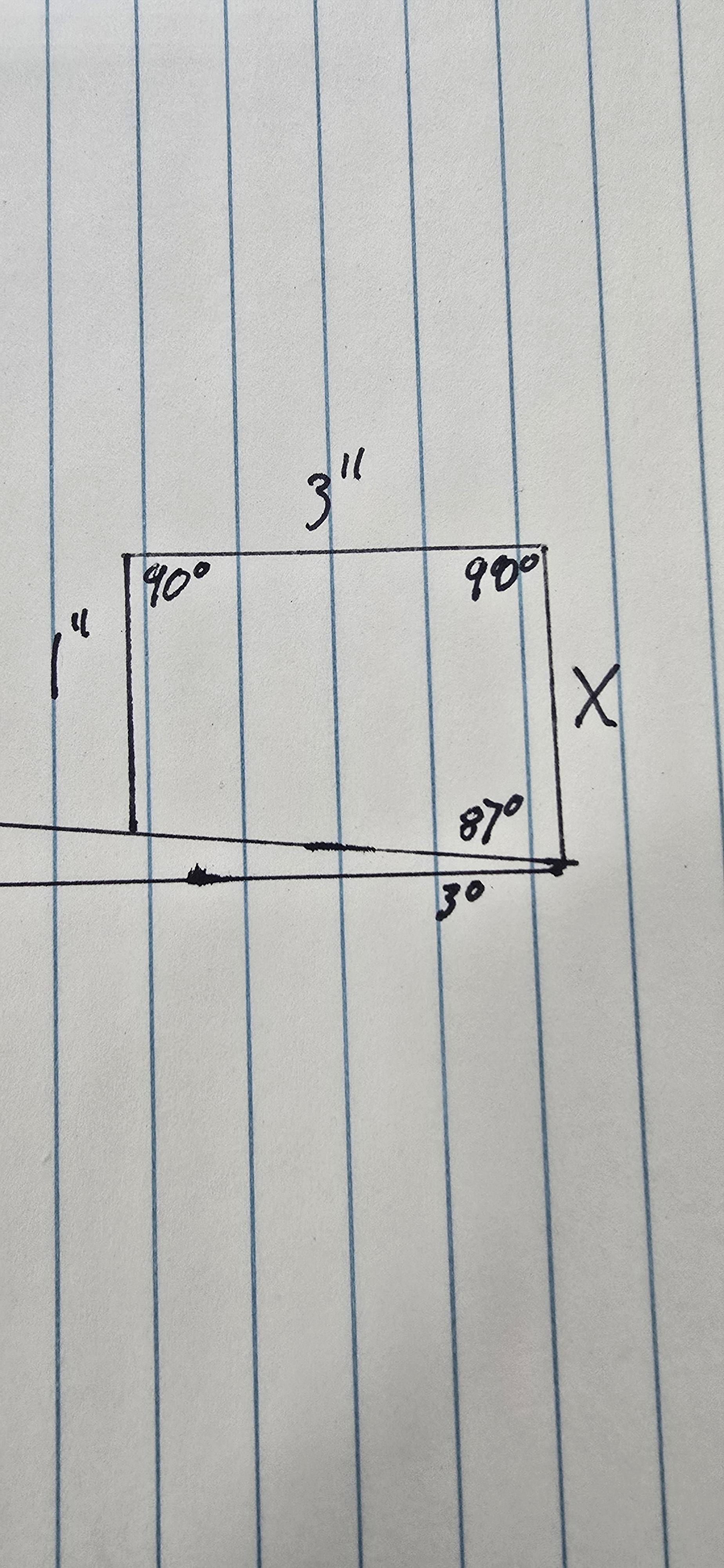
I've been out of school too long and my math brain isn't mathing.
I'm trying to build a shelf that will be level on a 3° slope. I just need to figure out the length of the opposite leg that will make it level. I know I've got to bisect it into triangles but I just can't seem to make the numbers work in my head.
r/askmath • u/Traditional-Role-554 • Nov 04 '25
i have a feeling this is a common question but what are their definitions cause i have never had to understand them until now and it's not something my teacher really cared to cover. i guess they're functions? maybe? not really any good grasp on them outside of putting them on a graph. that also raises another question of where their graphs come from
r/askmath • u/axelmames09 • Aug 14 '25
the only data i get is all the sides of the picture and that 2EC equals ED. i need to find EC and ED but without any angles i dont know what to do, how do i even get one single angle? please help
r/askmath • u/matt_888_is • 20d ago
I've tried to solve this problem by removing 3x out of the function by using the double angle identity, where cos(A+B) = cos(A)cos(B)-sin(A)sin(b). But now I need to substitute in the equation, I put cos(x)(1-4sin^2(x)=sin^2(x). From here it should be algebra, but I don't see how to solve it.
r/askmath • u/Thoretical_Scientist • Jul 07 '26
Since I first began to study Trigo, I have realized how important it is to know the values for each angle by heart. Although I have understood the meaning of each Function (sine, cosine, tangent etc), nobody actually explained to me where the values for each angle come from. Does anyone have any ideas?
r/askmath • u/AshasSa1tWife • 27d ago
This is for my AC electrical theory course. I’m honestly really confused where these numbers are coming from. The text isn’t really clear. I honestly am so lost I can’t elaborate any more.
r/askmath • u/One_Wishbone_4439 • Aug 11 '26
r/askmath • u/Broad-Annual3170 • 18d ago
I'm currently in Grade 11 (IBDP) trying to lock down my math research essay of 4,000 words. I am thinking to investigate Vincenty’s Inverse Formula, but I see that the math is notoriously difficult and might be too complex for a high schooler.
Before I commit to this topic, I wanted to get info on a few things:
Can a high school student actually understand the maths behind? If I spend enough time on it, is the core concept graspable, or is it completely out of my depth to apply and undestand?
Is it possible to derive and manipulate? Is a full derivation completely out of reach for a Grade 11 student, or are there parts of it I can successfully derive and explain in my essay?
Evaluating limitations: I know every formula has specific situations where it fails or struggles to work. Does this formula has a good scope to evalute and discuss limitations in around 800-1000 words?
This topic feels like a genuine investigation and my research essay is gonna compare haversine formula to this where I investigate which of the following provide more accurate results to find the shortest distance on Earth, but I don't want to drown in math that I won't be able to explain.
Any advice, resources, or warnings would be massively appreciated! Thanks!
r/askmath • u/AccomplishedDig8810 • Sep 14 '26
My teacher says its correct, but many of my peers (as well as I) disagree. I have attempted a tan half angle substitution, but it's simply not yielding.