r/JapaneseHistory • u/aka-kara • 4h ago
Historical facts A wonderful story
3
Upvotes
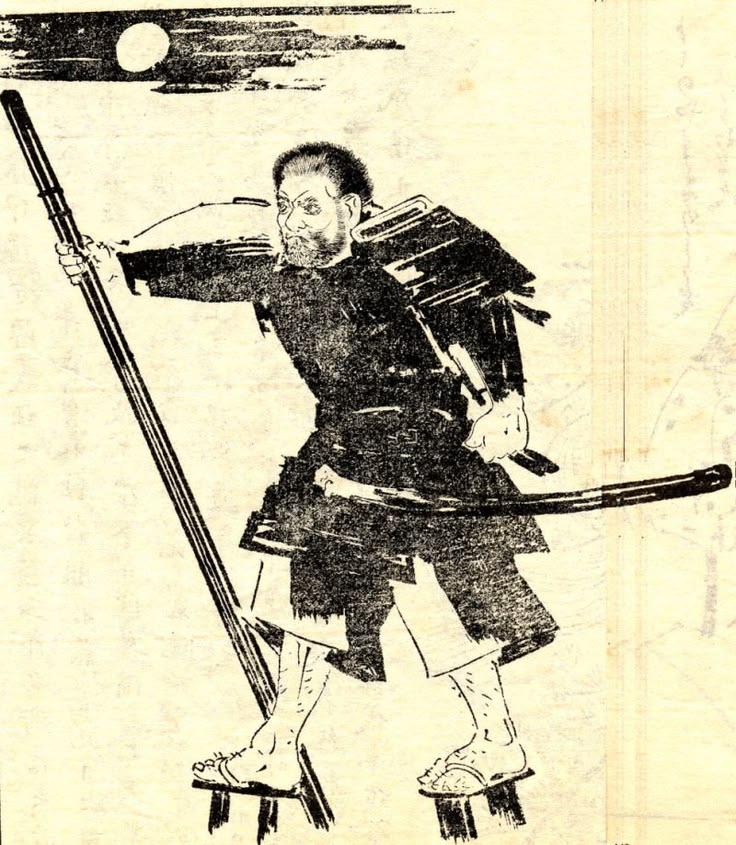
Do you know this ballad and the story behind it?
r/JapaneseHistory • u/aka-kara • 4h ago
Do you know this ballad and the story behind it?
r/JapaneseHistory • u/H4ppybirthd4y • 9h ago
r/JapaneseHistory • u/HovercraftUnhappy536 • 14h ago
Hey, I’m doing my history research project on Unit 731. I really want to do it on this topic because it’s rarely spoken about and it’s extremely important.
I’ve found it very hard to find peer reviewed useful sources- especially primary sources. I also haven’t found any historians I could contact (if there are any).
Is anyone able to give a bit of help if they have any knowledge on the topic, or shiro ishii, or even on Japan the years leading up to it. It would be so greatly appreciated. Thanks!
r/JapaneseHistory • u/boxer1182 • 1d ago
r/JapaneseHistory • u/andriytupac • 1d ago
r/JapaneseHistory • u/SamuraiEhoes • 2d ago
r/JapaneseHistory • u/Available_Mind271 • 2d ago
r/JapaneseHistory • u/Available_Mind271 • 2d ago
r/JapaneseHistory • u/Available_Mind271 • 2d ago
r/JapaneseHistory • u/Available_Mind271 • 2d ago
r/JapaneseHistory • u/Speculative_Human • 3d ago
r/JapaneseHistory • u/hatsunemikudaisuki • 3d ago
I just watched a video that introduces the political history of the late Meiji Era. The video portrayed Prime Minister Taro Katsura as a tragic figure who wanted to promote constitutional democracy but ended up being thrown out by the misled public (somewhat, according to the video). I was really attracted by this history and want to know more about how people evaluate Taro, as I am aware that the more emotionally appealing I find a historical narrative, the less likely I am to understand it objectively and accurately.
r/JapaneseHistory • u/ChemicalGrade5533 • 4d ago
Hello all! I’m hoping someone can help me out.
I’m researching my family’s experiences in the Ternate, Bacan, and Halmahera area during WWII. I’m looking for a way to access these sources:
『日本憲兵正史』 (1976), especially pp. 1066–1071: NDL record
江川俊治『ハルマヘイラ島生活』 (1921), and any other writings by Shunji Egawa about the area: NDL digitized record
『ハルマヘラ戦記』 (1976), published by ハルマヘラ会: Showa-kan record
I’m also interested in the 26th Special Base Force (第26特別根拠地隊). Japan’s National Institute for Defense Studies lists a 1958 collection of oral accounts under ①中央-日誌回想-685.
If you know of a digitized edition, a library that can provide access or copies of relevant pages, or a researcher familiar with these records, I’d be grateful for a lead. I’m happy to follow the library’s access and copying rules.
Thank you!
r/JapaneseHistory • u/Spirited-Warning8751 • 6d ago
I went to Sekigahara town, site of the battle in 1600. There is a stele commemorating the fallen soldiers of the battle at the map location shown.
According to introduction at the place, this stele was made in 1817 during the Edo period. Japanese era names are well established by this time. However, at the end of this stele writes "嘉慶二十二年" which is the Qing dynasty era name of that year. This stele was not made by anyone associated with China, and in the text itself, the Japanese era name in 1600 (慶長) is used.
r/JapaneseHistory • u/ginpachi777 • 5d ago
r/JapaneseHistory • u/Yu_An_ju12 • 8d ago
r/JapaneseHistory • u/Logical-Trick2596 • 8d ago
r/JapaneseHistory • u/Cheap-Industry8088 • 8d ago
Hi, I’ve been doing a lot of research into historical fashion in Japan and I’ve really been struggling to find resources on an exact timeline of when certain styles developed. It’s so difficult to find information on how clothing styles looked in Japan at more precise times compared to other countries (European fashion history is so extensively documented it’s maddening how stark the contrast is). Any resources I find just list all styles as being Edo period, but the Edo period was 200 years, and a lot of styles were only developed midway through or even late into the era. The time table I’m looking for is women’s hair and dress from about 1590 to 1620. Anything later than 1630 is unusable for the project I’m working on. Thank you so much to anyone who offers any insight at all.
I’ve gotten to the point where I’m contemplating buying books that are almost entirely in Japanese despite me not being able to read the language 😭
r/JapaneseHistory • u/gabsdebrito • 9d ago
Hey, its been a while,
Here's another update on my 1467 project. A few things have changed, like the kamon removal from the map itself and the redraw of multiple provinces, that's why some of them are not present.
The map is a work in progress.
r/JapaneseHistory • u/Straight_Total_5802 • 9d ago
First thing first. I am white, fully Scandinavian white. I know that isn’t important in the context of this painting but I think it is important for anyone given this context that I am.
This painting was given to my by my great grandpa. He traveled with his wife to Japan in the 70’s. I know that cause he told me:)
(Edit: I forgot to look at the back of the painting, it’s from 1981! And yes it’s from Japan. It also says Nikko on it. The picture is sealed within the frame and I don’t want tear at 45 old frame. It appears to be sealed with screws anyways covered with tape to prevent the handler getting a cut.)
I don’t know who this artist is or where this painting came from. All I know is that I am keeping it as a part of the many Asian antique things I’ve come to own through my elders.
If there anyone who can tell me anything about it, I would highly appreciate it. I’ve tried my best to take a picture of the signature but it is a tad bit difficult because there’s painted mountain rocks going through it.
r/JapaneseHistory • u/DainJaimeson • 10d ago
My father gave me this flag. I believe he found it when doing demolition work on a hoarders house. His uncle who Is full Japanese says it has signatures of Kamikaze pilots. It looks like there’s blood on it. I understand that this era of the flag has some negative political connotations to it, but I know very little about it. I’m not sure what to do with it… any help is greatly appreciated! Thank you.
r/JapaneseHistory • u/samuraibloodline • 10d ago
r/JapaneseHistory • u/Iron-Shadow-552 • 9d ago
Hello, I’m researching the physical measurements of members of the Japanese Imperial Family during the Shōwa era. I’m particularly interested in finding the exact height of Prince Takamatsu (Nobuhito). He appears to have been approximately 160–170 cm tall. Are there any official Japanese archival records, military documents, or imperial records that specify his exact height?
Thank you!
r/JapaneseHistory • u/MieGalleryPrints • 10d ago
Enable HLS to view with audio, or disable this notification
r/JapaneseHistory • u/SamuraiEhoes • 11d ago
In 1793, a Japanese sailor named Tsudayu set out on what should have been an ordinary voyage.
He had no plans to explore the world. But a storm changed everything.
Tsudayu was aboard the Wakamiya-maru, a Japanese cargo ship carrying rice toward Edo (present-day Tokyo). The ship was blown off course and drifted across the North Pacific before reaching the Aleutian Islands, then under Russian control.
For the crew, this was only the beginning of an extraordinary ordeal.
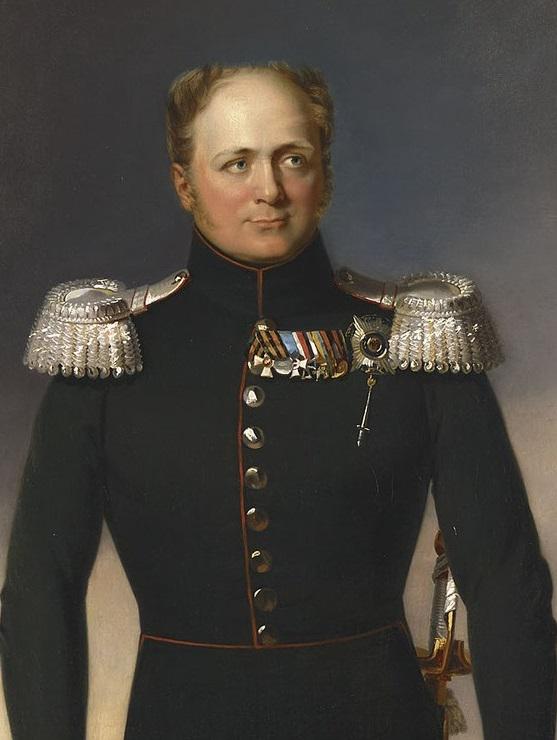
The survivors eventually traveled deep into Russia, spending years far from home. Tsudayu and his companions eventually reached St. Petersburg, where they met Emperor Alexander I.
Imagine being a sailor from a country with extremely limited contact with the outside world, suddenly standing before the ruler of one of Europe's great powers.
But Tsudayu's greatest wish was not to explore Russia or see more of Europe. He wanted to return to Japan.
Eventually, he and three other Japanese sailors boarded the Russian ship Nadezhda, which was taking part in Russia's first circumnavigation of the globe. Their journey home took them across the Atlantic, around Cape Horn at the southern tip of South America, and across the Pacific.
In 1804, after more than a decade away from Japan, Tsudayu and his companions finally reached Nagasaki.
Think about that: a man who never intended to become an explorer ended up traveling around the world simply because he wanted to go home.