r/JapaneseHistory • • Sep 18 '26

Question What could be the reason why Christianity was largely rejected in Japan, but widely embraced in Korea?

61 Upvotes

From what I know, Christianity actually arrived in Japan earlier that in Korea. During the 1500s and early 1600s, some Shoguns and Daimyos of the Tokugawa Shogunate were actually receptive and open about Christianity, then suddenly in the latter half of the 1600s, the Shoguns and Daimyos became hostile towards Christianity, and many Japanese Christians suffered martyrdom.

With Korea, it's the other way around. Christianity was introduced in Korea around the 1700s under the Joseon Dynasty, and Korean Society was initially hostile on Christianity, and many Koreans who converted to Christianity was martyred in the 1700s. But during the latter half of the 1800s, Christianity became gradually accepted into Korean society. In the early 1900s, before the Korean War happened, Pyongyang, the capital of North Korea, was actually nicknamed the Jerusalem of the East, because of how many Christians are living in the city. The grandparents of Communist Leader, Kim Il Sung (grandpa of Kim Jong Un), were actually Christian ministers in the late 1800s.

Today, Christianity is around 1.5% of the Japanese population, while in South Korea, Christians consists of ⅓ of the population. The capital of South Korea, Seoul, has so many churches in every block.

From a historical perspective, why did two divergent trajectories happened in Japan and Korea with regards to Christianity? Why was Japanese society initially receptive of Christianity, and later became hostile, while with Korean society, it's the opposite (initially hostile, later receptive)?

I will really appreciate all of your insights and responses.

Domo Arigato. Komapsumnida. 🇯🇵🇰🇷

r/JapaneseHistory • • 24d ago

Question Has anyone read Prof. Gregory Smits revisionist history of Ryukyus?

Post image
52 Upvotes

I found the abstract entertaining. https://apjjf.org/2019/07/smits

r/JapaneseHistory • • 21h ago

Question How does Japan grapple with (do they?) the United States as a former enemy, now ally?

Thumbnail
2 Upvotes

r/JapaneseHistory • • 26d ago

Question Influence of geography on Japanese religion and nature reverance

9 Upvotes

Good afternoon.

I am an American who stereotypically watched Princess Mononoke (half in a theater last night, as they had a special rescreening 30 years late haha 😂 🍿) and it made me think about Japanese attitudes toward the Nature as an idea.

I know Japan is an island formed in the ocean by tectonic activity pushing mountains up out of the sea.

As a result, it is prone to earthquakes and tsunamis that destroy low-lying settlements in certain areas. It also is quite mountainous, with many places being hard to build in.

Could these elements be part of why Japan seems to avoid clearing new forested areas for settlements? I know many Japanese movies portray land clearing and human development as a moral insult against certain spiritual forces alligned with the forest or nature. Is this because building into certain forests often leads to death from tsunamis and earthquakes? Are cities located partially for best resistance to such threats.

r/JapaneseHistory • • Jul 14 '26

Question Please can someone explain who/what this statue means and represents?

Post image
143 Upvotes

Hey everyone, I used to live in Japan and this statue was outside a temple I lived near. Does anyone know who/what he is and represents? There was another nearly identical statue on the other side of the entrance with a few minuscule differences if that provides any further idea.

Thank you!

r/JapaneseHistory • • Aug 21 '26

Question Do you feel Japanese people have historically contribute to the displacement of native Hawaiians in Hawaii?

Enable HLS to view with audio, or disable this notification

39 Upvotes

r/JapaneseHistory • • Aug 17 '26

Question Could Japan have colonized North America via the west coast?

Thumbnail
4 Upvotes

r/JapaneseHistory • • 6d ago

Question Why is this stele at Sekigahara using Chinese era name?

Thumbnail
gallery
59 Upvotes

I went to Sekigahara town, site of the battle in 1600. There is a stele commemorating the fallen soldiers of the battle at the map location shown.

According to introduction at the place, this stele was made in 1817 during the Edo period. Japanese era names are well established by this time. However, at the end of this stele writes "嘉慶二十二年" which is the Qing dynasty era name of that year. This stele was not made by anyone associated with China, and in the text itself, the Japanese era name in 1600 (慶長) is used.

r/JapaneseHistory • • 26d ago

Question I don't understand: Why couldn't Imperial Japan simply trade with its neighbours during industrialisation instead of conquering Asia?

Thumbnail
0 Upvotes

r/JapaneseHistory • • Jun 27 '26

Question Do Japanese people have Austronesian ancestry?

0 Upvotes

I've heard from some people and I've also read from various online sources that when the Yue tribes of Southern China, who then migrated to Taiwan and the Malay archipelago en masse, some of these tribes were able to migrate to Japan and according to the sources that I've read, the southern islands of Okinawa, Ryukyu and Shikoku have significant amounts of Austronesian related ancestry. How true is this?

I will really appreciate if a Japanese person can respond to this. Domo Arigato!

r/JapaneseHistory • • 25d ago

Question Where can I learn about everyday urban life (including religious life) in medieval/early-modern Japan?

1 Upvotes

I'm running a historical-fantasy RPG campaign set in Sengoku Jidai Kyoto. I know a fair bit about the main events and figures, but I want to know more about the mundane facets of life in order to help with the worldbuilding, and give the scenes more substance.

I'm also interested in learning about religious life, especially interactions between Buddhists and Christians, and about the experiences of Christian missionaries and converts. I'm also interested in learning about the nanban in general.

Any resources that I could use? It doesn't necessarily need to strictly be about 16th century Kyoto. I could read something about Christians in Nagasaki, or about the life of an urban commoner during the Edo Jidai.

r/JapaneseHistory • • 27d ago

Question How do Japanese today feel about Akechi Mitsuhide?

2 Upvotes

I am watching the series “Awaiting Kirin” and the portrayal of Akechi is different than what I thought. They seem to take a more noble approach to him. He is portrayed as thoughtful, good and only worried about bringing peace to the realm. That got me thinking how modern Japanese people see him. I wonder if anyone has any insight.

r/JapaneseHistory • • Aug 18 '26

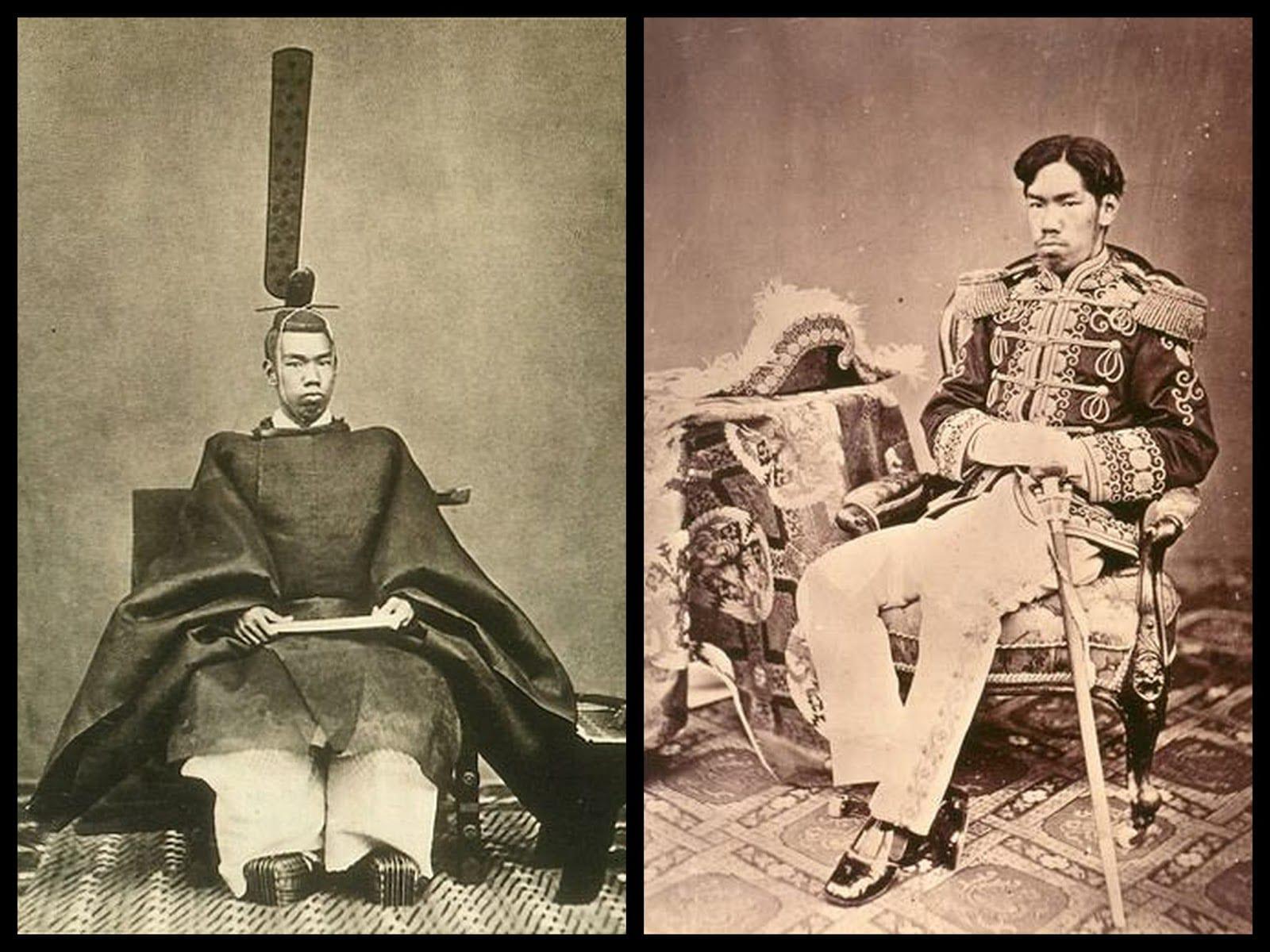
Question Was Emperor Meiji himself keen on the changes of the Meiji Restoration from the beginning, or was he influenced by other figures to support the changes later?

Post image
53 Upvotes

Emperor Meiji was keen on modernisation and its change during the Meiji Restoration.

The question is that was he keen on the changes from the beginning or did he start to support the changes after being inspired or influenced by the major figures of the Meiji Restoration?

He was not exactly a leading figure, and in many cases, he only did what he was told to do by his servants.

r/JapaneseHistory • • Jul 21 '26

Question Theories about the ancestors of modern Japanese and Koreans. Is this accurate?

14 Upvotes

I’ve been reading alot about this topic but so far, can it be deduced that modern Japanese, especially in terms of their continental Asian ancestry, descend from proto Japonic and Koreanic lineages whilst modern Koreans show more exclusive continuity with proto Koreanic lineages?

Recent genetic studies show that the Yayoi were more related to ancient Korean Ando population, which I believe is more related to proto Japonic/Mumun/Hongshan peoples, and that Kofun were more “Yellow River shifted”, which I think is reflective of proto Koreanics coming from Bronze Age west Liao river groups, who were mostly of yellow river descent .

Relevant sources:

https://www.nature.com/articles/s10038-024-01295-w

https://pmc.ncbi.nlm.nih.gov/articles/PMC8612925/

https://www.biorxiv.org/content/10.1101/2022.06.09.495471v1.full

r/JapaneseHistory • • 22d ago

Question Coin information

Post image
5 Upvotes

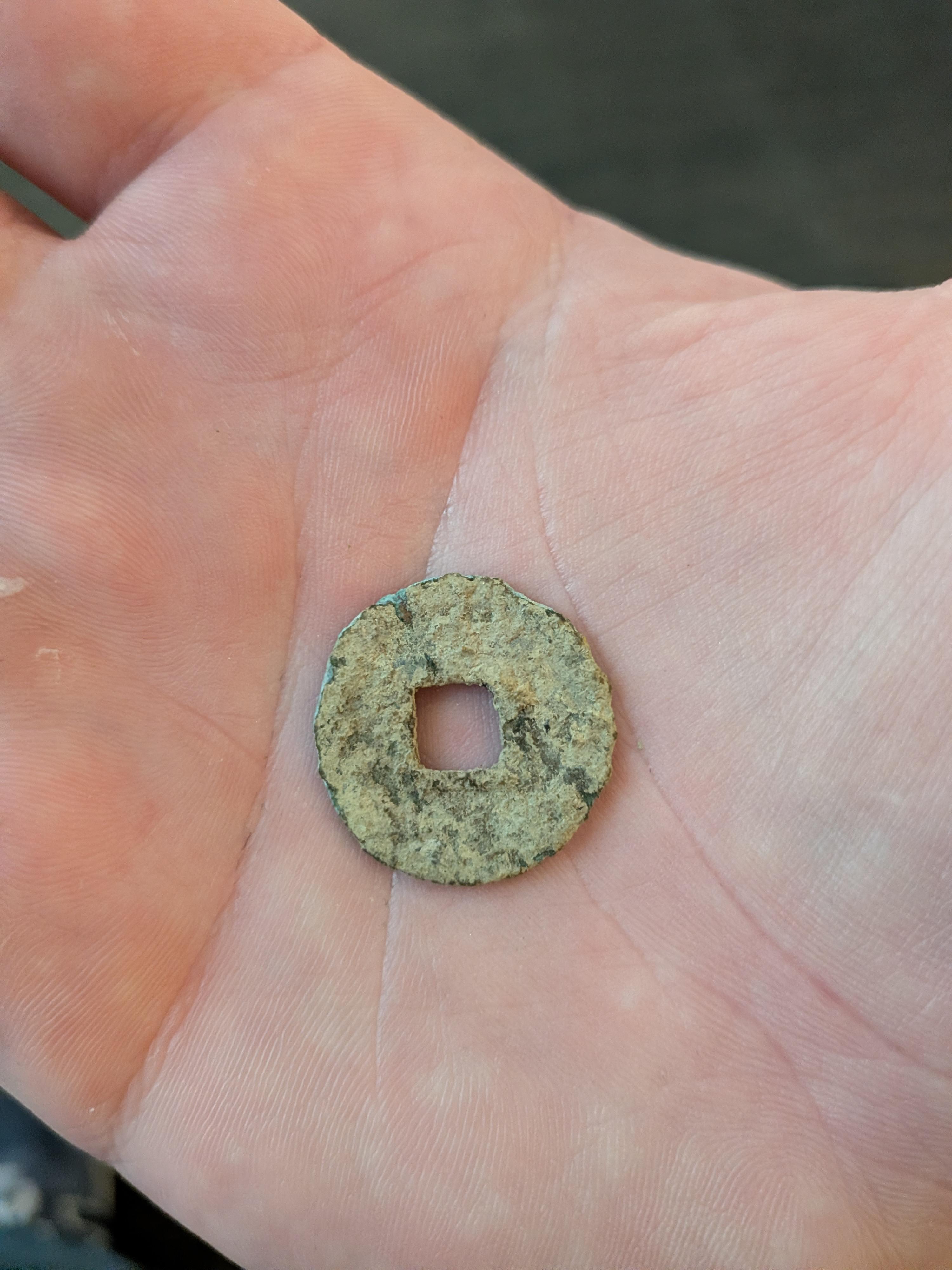
I found this coin on the forest trail at the inari shrine in Kyoto. I was wondering if anyone has any input on this thing. It's very very old, I initially thought it was a 50 yen coin, but the material seems to be heavily corroded copper, and obviously the hole is square. Thank you all.

r/JapaneseHistory • • Oct 24 '25

Question Japanese clans of Korean origin?

32 Upvotes

I would like some sources and information about the Japanese myth that states that some Japanese clans originated in Korea. This was even used during the Meiji Era to justify the annexation of Korea.

r/JapaneseHistory • • 4d ago

Question Why did the Japanese abandon “Hokushin-ron” doctrine, even after signing an anti-soviet pact with Germany?

Thumbnail
0 Upvotes

r/JapaneseHistory • • 29d ago

Question I am trying to find a book on the history of Japanese Incense called "香道の歴史事典" (Kōdō no Rekishi Jiten) by Jinbo Hiroyuki. But I live in the states.

2 Upvotes

I have recently gotten into the joys of traditional Japanese incense and the incense ceremony. I would like to learn more about it's history. I heard this book was good, so I tried looking for it, but it seems like the only way to get it in the states is via a library, and I don't have access to transportation at the moment. Is there somewhere I can buy it digitally or a physical copy in the states?

r/JapaneseHistory • • 8h ago

Question Are there any good written resources to learn about samurai morality between the Heian and Edo era?

0 Upvotes

Current to read list on Bushido:

Sources of Japanese Tradition, Volume One: From Earliest Times to 1600 - Wm. Theodore de Bary, Carol Gluck, Arthur Tiedemann

Bushido: the Creation of a Martial Ethic in Late Meiji Japan - Oleg Benesch, UBC

Bushido Explained: The Japanese Samurai Code: A New Interpretation for Beginners - Alexander Bennett

Japan The Ultimate Samurai Guide: An Insider Looks at the Japanese Martial Arts and Surviving in the Land of Bushido and Zen - Alexander Bennett

Recreating Japanese Women: 1600-1945 - Gail Lee Bernstein

The Book of Bushido: The Complete Guide to Real Samurai Chivalry - Antony Cummins

The Book of Samurai: The Fundamental Teachings - Antony Cummins

The Bushido Code: Words of Wisdom from Japan's Greatest Samurai - Tadashi Kamiko (Author), William Scott Wilson (Translator)

History of Japan Playlist - Linfamy, 2017- , YouTube

The Book of Ninja: The Bansenshukai - Japan's Premier Ninja Manual - Yoshie Minami (Author), Antony Cummins (Translator)

The Way of the Samurai: Yukio Mishima on Hagakure in Modern Life - Yukio Mishima (Author), Kathryn Sparling (Translator)

The Complete Musashi: The Book of Five Rings and Other Works: Definitive New Translations of the Writings of Miyamoto Musashi - Japan's Greatest Samurai - Miyamoto Musashi (Author), Alexander Bennett (Translator), Graham Sayer (Foreword)

World History Series: Traditional Japan - Don Nardo

Bushido: the Way of the Warrior, A New Perspective on the Japanese Military Tradition - John Newman

Bushido: The Samurai Code of Japan - Inazo Nitobe (Author), Alexander Bennett (Introduction and Notes)

Encyclopedia of Japan: Japanese History and Culture, from Abacus to Zori - Dorothy Perkins

Bushido: Way of Total Bullshit - Rich, December 8, 2014, Tofugu

What is Bushido? - SATORATOS (N.D.) Samurai & Bushido

The Seven Virtues of Bushido - SATORATOS (N.D.) Samurai & Bushido

Seppuku & Honor - SATORATOS (N.D.) Samurai & Bushido

Modern Bushido - SATORATOS (N.D.) Samurai & Bushido

The Secrets of Koga-ryu Ninjutsu - Fujita Seiko (Author), Don Roley (Translator)

The Pillow Book - Sei Shonagon (Author), Meredith McKinney (Translator)

Zen and Japanese Culture - Daisetz T. Suzuki (Author), Richard M. Jaffe (Introduction)

Hagakure: The Secret Wisdom of the Samurai - Yamamoto Tsunetomo (Author), Alexander Bennett (Translator)

Samurai: The World of the Warrior - Stephen Turnbull

The Tale of the Heike - Royall Tyler (Translator)

The Art of War - Sun Tzu

The Samurai Encyclopedia: A Comprehensive Guide to Japan's Elite Warrior Class - Constantine Nomikos Vaporis (Author), Alexander Bennett (Foreword)

The Complete Guide to Bushido: The Samurai Code of Honor - (N.D.) Samuraicode.org

r/JapaneseHistory • • 21d ago

Question Some questions on social status, class hierarchy, and marriage in Sengoku-era Japan

7 Upvotes

I'm perhaps going a little bit nuts on the research for a short work of fiction, but I'm currently researching marriage in Sengoku-era Japan, specifically among the upper classes. (Note: I'm mostly limiting myself to Sengoku-era Japan because I can understand the social hierarchy somewhat better than the Heian-era courtly rankings, but please don't feel like you need to limit your answers on my account. I'm happy to hear what it was like in other periods, too!)

I've found this post which has answers that are wonderfully informative on the traditions and what actually happened but not so much on the implications and the unspoken 'rules' surrounding who's permitted to marry whom.

My general understanding is that much like in Western society, marriages were often arranged for political capital, with parents essentially using their children to solidify alliances between houses and attempt to improve familial standing. In addition to that, Western society also had certain ideas around the permissibility of "class intermarriage" probably best summed up as don't.

Was there anything similar in Japanese society? Could someone of a lower social class marry someone of a much higher (relatively speaking) status without either of them coming under censure?

For example, would marriage be socially permitted between:

  • a wealthy, well-connected commoner and a daimyo (or their children)?
  • a daimyo and a member of the hereditary aristocracy?
  • a samurai's child and a low-ranking member of the hereditary aristocracy?

Furthermore, would the rules be different for men and women? Would they be different for a second child as opposed to a first? Would it make either the lower or higher status spouse the topic of gossip or an object of pity?

Thanks in advance for any answers you're able to give!

r/JapaneseHistory • • 8d ago

Question Early 1600s fashion

1 Upvotes

Hi, I’ve been doing a lot of research into historical fashion in Japan and I’ve really been struggling to find resources on an exact timeline of when certain styles developed. It’s so difficult to find information on how clothing styles looked in Japan at more precise times compared to other countries (European fashion history is so extensively documented it’s maddening how stark the contrast is). Any resources I find just list all styles as being Edo period, but the Edo period was 200 years, and a lot of styles were only developed midway through or even late into the era. The time table I’m looking for is women’s hair and dress from about 1590 to 1620. Anything later than 1630 is unusable for the project I’m working on. Thank you so much to anyone who offers any insight at all.
I’ve gotten to the point where I’m contemplating buying books that are almost entirely in Japanese despite me not being able to read the language 😭

r/JapaneseHistory • • 11d ago

Question How much non-Western language works do Western historians of non-Western societies and cultures actually read?

Thumbnail
0 Upvotes

r/JapaneseHistory • • May 31 '26

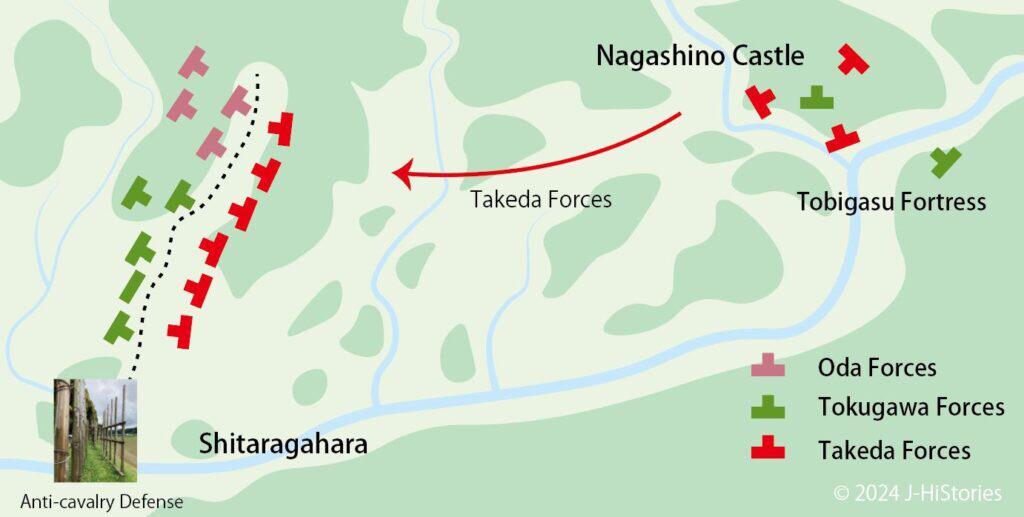
Question Why did Takeda Katsuyori choose to attack at Nagashino?

Post image
22 Upvotes

I’ve heard many people sympathetic to Katsuyori, which I don’t understand as my understanding of Nagashino was that he willingly drove some of the best cavalry in Japan against a larger dug in enemy force, against the advice of his top generals who had served with his father for years, for no reason but his own overconfidence and desire to escape his father’s shadow? I have tried thinking about and looking for other reasonable explanations, though I cannot find any logical reason for it.

Are those who are sympathetic to him just wrong, or is there an actual valid explanation?

r/JapaneseHistory • • Sep 17 '26

Question Why Soga no Kurayamada no Ishikawa no Maro had such a long name?

3 Upvotes

I've never seen anyone else in Japanese history having even close to this long of a name. Usually they all had "Personal name" + no + "Clan name". Soga no Kurayamada no Ishikawa no Maro having a long full name is unusual and he wasn't even that important compared to other aristocrats so I'm curious.

r/JapaneseHistory • • 10d ago

Question Family heirloom, supposed Japanese painting with gold dust. Anyone can tell me about it?

Thumbnail
gallery
18 Upvotes

First thing first. I am white, fully Scandinavian white. I know that isn’t important in the context of this painting but I think it is important for anyone given this context that I am.

This painting was given to my by my great grandpa. He traveled with his wife to Japan in the 70’s. I know that cause he told me:)
(Edit: I forgot to look at the back of the painting, it’s from 1981! And yes it’s from Japan. It also says Nikko on it. The picture is sealed within the frame and I don’t want tear at 45 old frame. It appears to be sealed with screws anyways covered with tape to prevent the handler getting a cut.)

I don’t know who this artist is or where this painting came from. All I know is that I am keeping it as a part of the many Asian antique things I’ve come to own through my elders.

If there anyone who can tell me anything about it, I would highly appreciate it. I’ve tried my best to take a picture of the signature but it is a tad bit difficult because there’s painted mountain rocks going through it.