r/foraging • u/Knarkeladden • 4h ago
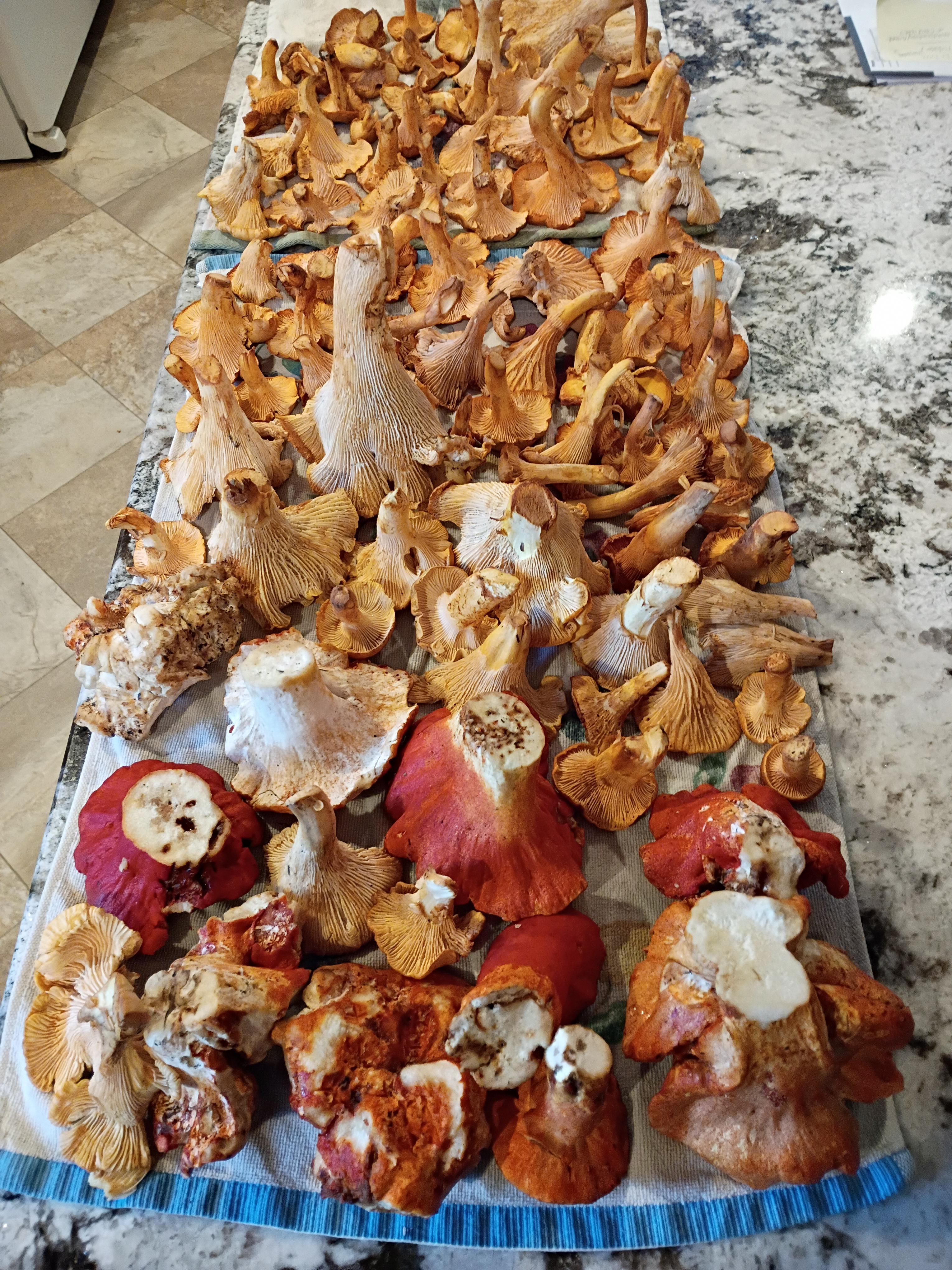
Mushrooms This really kind lady randomly gave us a whole bag of (Chantarelles?) while on a hike!
132
Upvotes
Feeling blessed!
r/foraging • u/thomas533 • Jul 28 '20
Every year we have posts from old and new foragers who like to share pictures of their bounty! I get just as inspired as all of you to see these pictures. As we go out and find wild foods to eat, please be sure to treat these natural resources gently. But on the other side, please be gentle to other users in this community. Please do not pre-judge their harvests and assume they were irresponsible.
Side note: My moderation policy is mostly hands off and that works in community like this where most everyone is respectful, but what I do not tolerate is assholes and trolls. If you are unable to engage respectfully or the other user is not respectful, please hit the report button rather then engaging with them.
Here is a great article from the Sierra Club on Sustainable Foraging Techniques.
My take-a-ways are this:
Happy foraging everyone!
r/foraging • u/Knarkeladden • 4h ago
Feeling blessed!
r/foraging • u/-Your-Local-Entity- • 14h ago
Edit: forgot to mention I'm in Oklahoma.
r/foraging • u/No_Pineapple8190 • 14h ago
Asplenium bulbiferum/mauku, nice and easy to ID. As with all my first scores I prepared them basically to get to know the unadulterated flavour - steamed and salted. Next time it'll be fried and served with Kikkoman.
Days later I tried asplenium oblongifolium/huruhuruwhenua but didn't like it quite as much
r/foraging • u/reddit33450 • 1h ago
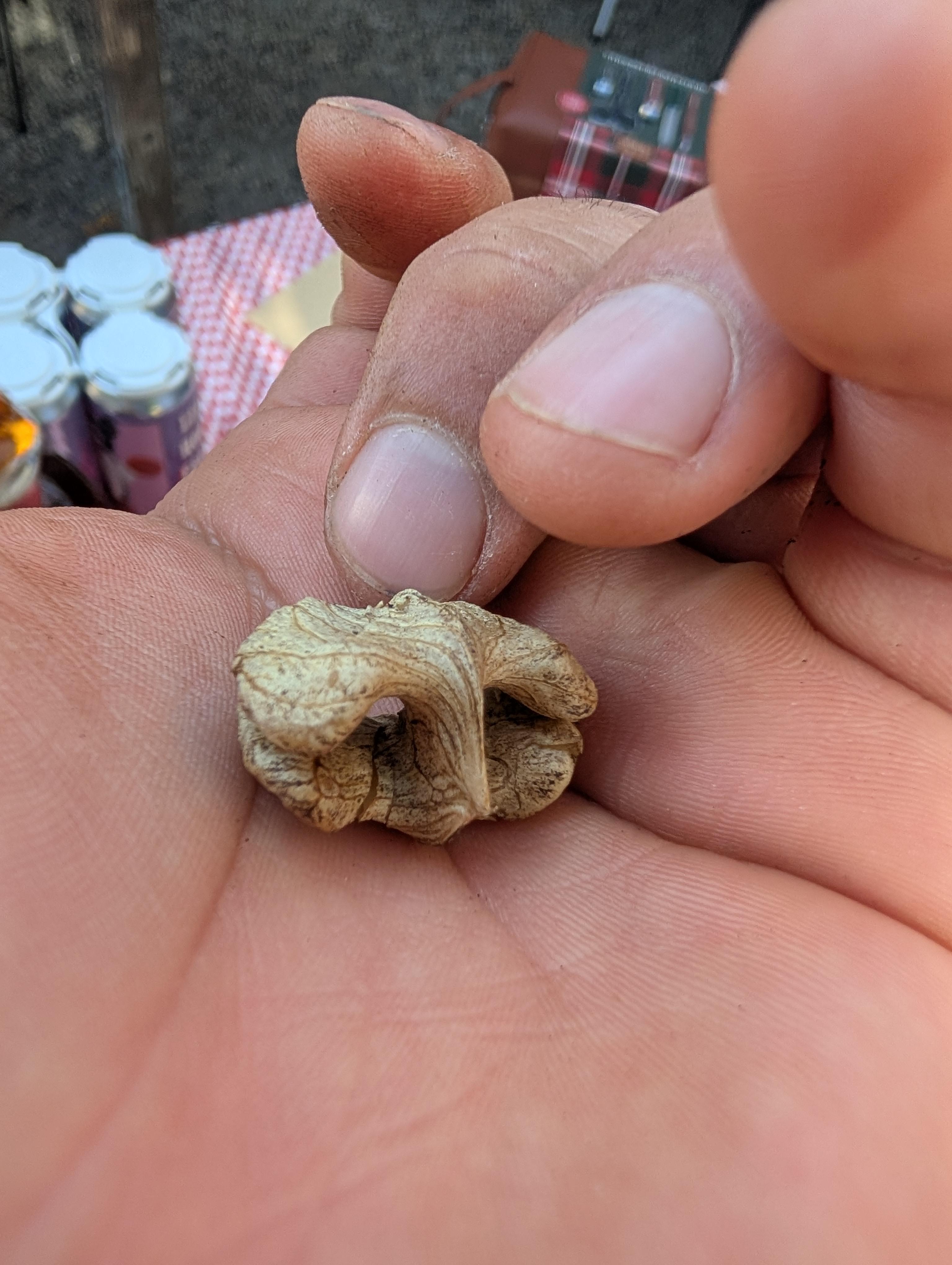
these "nuts" are the seeds of the ginkgo biloba tree, which is one of my favorite species.
the intact seeds with their pungent outer flesh may appear to be fruits, but are actually just naked seeds with a fleshy coat (called the sarcotesta) because ginkgo is a gymnosperm, and does not produce true fruit or flowers. only angiosperms produce fruit and flowers.
ginkgo trees are very cool and interesting botanically. they are "living fossils", having existed for over 270 million years basically unchanged.
ginkgo biloba trees are the only species left in their entire phylum (they have zero living relatives!) and they are completely unique in almost every way. the epithet in the scientific name ginkgo biloba refers to the tree's leaf shape, "bi-loba" meaning "two-lobes".
ginkgos are dioecious, which means each individual tree is either male or female. only female ginkgos produce seeds. males produce just pollen. if you've seen ginkgos in the fall, but haven't seen these seeds, it's most likely that those were all male specimens.
the fleshy seed coat contains butyric acid when ripe, which gives it a pungent aroma that the most people find unpleasant, but personally i think it just adds to their charm, and i especially enjoy the very distinctive smell when there are many seeds crushed on the ground in the fall.
female ginkgos are uncommon in many places because they are widely (undeservingly!) disliked due to their aroma and perceived "mess". in the vast majority of cases, only males are planted intentionally nowadays. but thankfully, my city has thousands of mature females, and i adore them all.
it's thought that the pungent smell evolved to attract ancient megafauna, including some dinosaurs, to consume, then disperse the ginkgo seeds (in their excrement).
additionally, mature ginkgo bark has an unusually corky, soft, and warm texture, so they feel very nice to hug. (yes, i am a literal tree hugger!)
overall they really are such lovely trees. 💛
important safety notes
ginkgo "nuts" contain ginkgotoxin, which is mildly poisonous. cooking (heat) degrades the toxin enough to make them edible, but it does not destroy it completely. so after roasting/cooking them, you should only consume approximately 5-10 per day. never consume them raw (uncooked).
the outer fleshy layer (sarcotesta) of ginkgo seeds contains compounds very similar to those found in poison ivy, and thus causes a skin reaction for some people. it is recommended to wear gloves when processing it and avoid direct contact of your skin with the outer flesh or the juices from it.
(the reason i did not wear gloves in this post is because i do not get a skin reaction to it. only some people do)
r/foraging • u/eccentric_bee • 15h ago
Will It Brew? Mixed Mulberry Leaves (Morus spp)
Fresh vs. dried, an October experiment. This is another in my “Will It Brew?” series, exploring wild plants through the lens of tea, broth, and flavor. Thanks for following along!
Found
Northern Ohio USA, late October.
Most of the leaves are turning colors or falling now, but the little mulberry sprouts growing in the shade still have some healthy green leaves.
I have dozens of mulberry trees available to me, so gathering leaves is hardly a challenge. I take whichever healthy-looking leaves catch my eye, from whatever branches happen to be handy. At this time of year, that generally means the small, shaded growth.
ID Notes
Mulberry (Morus species) is a familiar tree around here, and its leaves can be surprisingly variable. Some are heart-shaped or oval, while others have several lobes, sometimes even on the same tree.
The leaves generally have toothed margins and prominent veins.
I'm using leaves from my local mulberries rather than selecting and documenting a single tree for this experiment, so I'm not claiming a particular species for every leaf in the pot.
Gathering
I choose healthy green leaves, avoiding the ones that are yellowing, damaged, or looking ready to fall.
In summer, there's no shortage. By late October, you may have to look a little harder. I find the best ones in shady spots where new growth has stayed green. Look for a mulberry stem shooting up in a wooded edge area, or a protected tree out of the frost.
Drying
While I drink the tea of fresh leaves all season long, I also dry mulberry leaves for winter tea and store them in jars once they're completely dry. I've already put away more than half a gallon this year just by grabbing a few now and then all season long. It's one of the pleasures of having so many mulberry trees that I can make a pot of tea, or gallons of iced tea, without worrying about the cost of every cup.
Preparation
For this experiment, I brewed two versions. Fresh, late-season green mulberry leaves, and mulberry leaves I'd dried earlier in the season. Both were prepared as ordinary hot infusions.
Fresh I used about five leaves, a small handful for a large cup of tea. I tore the leaves and poured over just boiled water. It steeped for four minutes, and I added a tiny amount of stevia.
Dried I used about two tablespoons of loosely crumbled leaves, poured over just boiling water, and steeped it five minutes. It also was sweetened with a tiny bit of stevia.
Fresh Leaf Tea
The fresh leaves produced a clear, bright yellow-green tea. The flavor was mild and naturally a little sweet smelling, and there was a little fruitiness to the taste. Just a suggestion of pear, like the quiet flavor you notice when eating a perfectly ripe pear that isn't especially sweet. It is pleasant and delicate.
Dried Leaf Tea
The dried leaves made a slightly more muted, straw-colored infusion. The flavor was slightly different from the fresh tea. Still mild and sweet smelling but it reminded me of sweet hay, in the best possible way. Like summer, dried. There's something comforting about that flavor, particularly when you're drinking it in autumn and know winter is coming. It's still mild, still unobtrusive, but genuinely pleasant. It would be easy to say this tea is boring, but it is really just pleasant and delicate.
Flavor Notes
Fresh: Mild, softly fruity, with a suggestion of pear. Like a lightly fruity green tea.
Dried: Gentle, sweet hay, warm and summery. Green tea adjacent.
Neither is strongly flavored and for me, that’s part of the appeal. Mulberry leaf tea is not a tea that announces itself from across the room. You can enjoy it without thinking about it, but if you stop and pay attention, there's something mild and lovely there.
Cold Infusion: For fresh leaves, I start by pouring over boiling water and then after a bit of a steep, I add cold water and sweetener. For dried leaves I just let the dried leaves steep in cold water in the fridge overnight, then sweeten. It makes a mild tea my family enjoys.
Blending
One of my favorite uses for mulberry is calming down more assertive teas. I don't particularly enjoy grape leaf tea by itself, but a tea that is half grape leaf and half mulberry, with a little lemon peel, makes a fresh summer drink.
Ginger can be aggressive on its own. But a little ginger peel with mulberry, a fraction of a cinnamon stick, and a black peppercorn? Very nice, especially in the colder months.
Mulberry gives these blends a mild foundation without competing with everything else. Somehow it holds it all together. It's a supporting actor that makes the rest of the cast look good.
Verdict
Will it brew? Absolutely.
Best as: An everyday hot tea, an inexpensive-by-virtue-of-being-free iced tea, or a gentle base for other herbal blends.
Would I try it again? I drink it regularly and have half a gallon of dried leaves waiting for winter, so I think we've answered that question.
Flavor strength: Mild.
It tastes remarkably like inexpensive generic green tea. Specifically, the Walmart store-brand green tea bags. I realize this sounds like faint praise. It isn't meant to be. Sometimes I want a cup of tea that doesn't demand my attention. I'm reading a good book, dipping a crispy cookie into my cup, and I don't want a botanical fireworks display interrupting a particularly interesting chapter. Mulberry is excellent at being that tea.
Mulberry leaf tea is the millennial greige of teas, and I mean that affectionately. It's not the belle of the ball, but a sturdy, agreeable, proficient dancing partner. It's pleasant company, doesn't demand much, and can happily dance all evening. Ok, I think I have tortured those metaphors enough, but I hope you get the idea. Mild, pleasant, plays well alone or with others.
A Note on Safety
Mulberry leaves have a history of use as tea, particularly white mulberry (Morus alba) in East Asian traditions. My tea is made from a mixture of locally growing mulberries, rather than leaves collected exclusively from positively identified white mulberry trees. As with any foraged plant, positive identification matters, and the species and plant part should be checked before making an infusion. This is a description of my own preparations and tasting experiences, not a medicinal recommendation.
If you're looking for a fresh local tea before autumn finally closes the door, have a look at your mulberry trees. There may still be a few good green leaves waiting for you.
r/foraging • u/classycryptid • 16h ago
Looking to find Azaleas in the beach grass, didn’t find any, just a ton of Russulas. Most were eaten.
Hoping to find something at least edible eventually. Finding something with psilocybin would be a jackpot
r/foraging • u/BehindTheTreeline • 19h ago
Found this beauty in Western Washington, roughly 500ft elevation on a big leaf maple tree.
Any pro tips on cooking or what bits to exclude if any would be highly appreciated 🙏
r/foraging • u/AcceptableSpare6546 • 15h ago
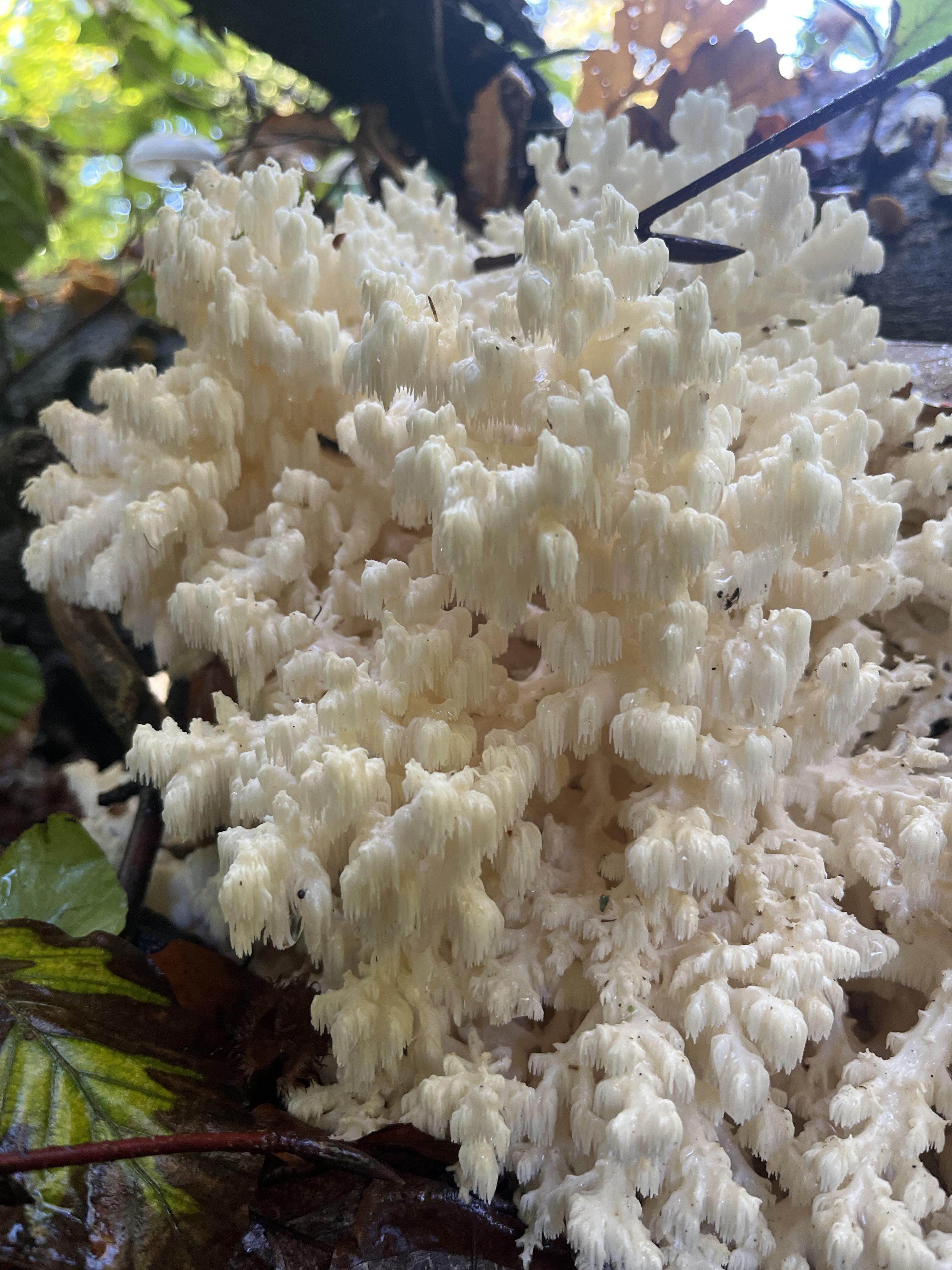
Just learned that the Coral Tooth mushroom is a good edible despite its somewhat spooky appearance… Looking for good advice before going back to forest for some harvesting and then cooking. Would the pictured specimen be too big/old? (found in Bavaria, Germany)
r/foraging • u/Common_Rich5267 • 21h ago
you know when you learn to recognize a plant and suddenly it's literally everywhere lol
like you've probably walked past it a thousand times without noticing
what plant did that for you ?
bonus points if it's something edible that most people just consider a weed
r/foraging • u/Smooth-Plenty3881 • 1h ago
Made some autumn olive thumbprint cookies last night and they were so good! I ate three last night (and snacked on the jam while i baked) and woke up this morning feeling pretty nauseous. I'm 100% sure I correctly identified them. Could it be the tannins even though they were cooked? Did I just have too much? Pls weigh in lol
r/foraging • u/mugen-and-jin • 1d ago
I pulled all the meat out of black walnut in one piece. Yes I am better than you.
r/foraging • u/Difficult_Pain6821 • 2h ago
found a bunch in my backyard
r/foraging • u/DiscombobulatedRub59 • 19h ago
I'm very fond of lamb's quarter and use it mostly in place of spinach.
I've never heard of using the seeds for anything tho, and right now they're seeding heavily.
Anyone know?
r/foraging • u/therealtompetty • 1d ago
How do you cook your foraged mushrooms? I have only gathered a harvest big enough for a meal a few times and I always end up doing pasta cause I get nervous
r/foraging • u/StaticRainbow23 • 1d ago
Edit: Thank you all for the responses! There were more than just these, we did just replant them all, so I guess we will see for sure by spring. No, they were not in the graveyard, just nearby in the woods, I am not in the habit of disrespecting the dead. It is a historic graveyard, so no one has been up there in a good long while, not important, just felt the need to mention.
The research Ive done isnt getting many results, one result says daffodils, another says wild onions. They smell earthy, not oniony, but there are a few layers on the outside like onions. These are rinsed as well. Really interesting find either way, but figuring out what they are would be great.
r/foraging • u/sborde78 • 14h ago
r/foraging • u/SirSkittles111 • 21h ago
r/foraging • u/annanicholesmith • 1d ago
99% sure but want to be 100% sure
r/foraging • u/PickeyPoo • 1d ago
Found in the Joliet IL area. Wow, giant puff ball coming atcha!
r/foraging • u/Unlikely-Cry-6390 • 2d ago
r/foraging • u/EmotionalSupportVape • 1d ago
What is the best way to preserve this so that I can still eat it “fresh” in 14 days?
r/foraging • u/Doyouseenowwait_what • 2d ago